
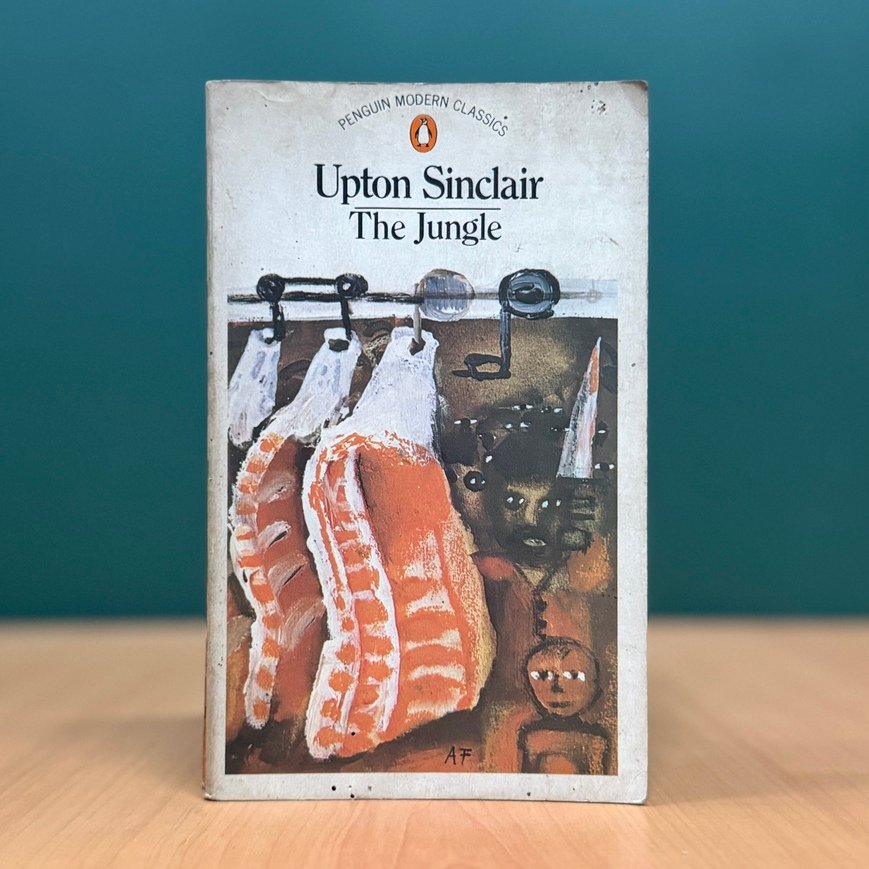
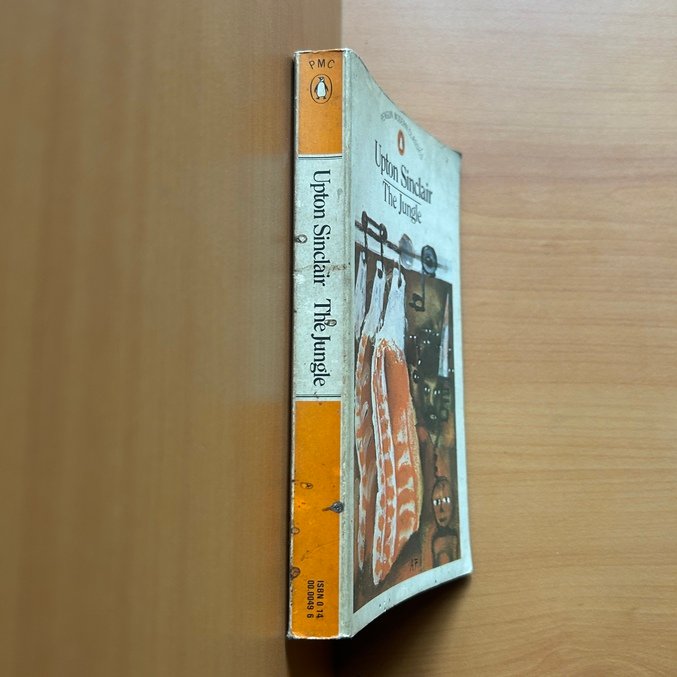
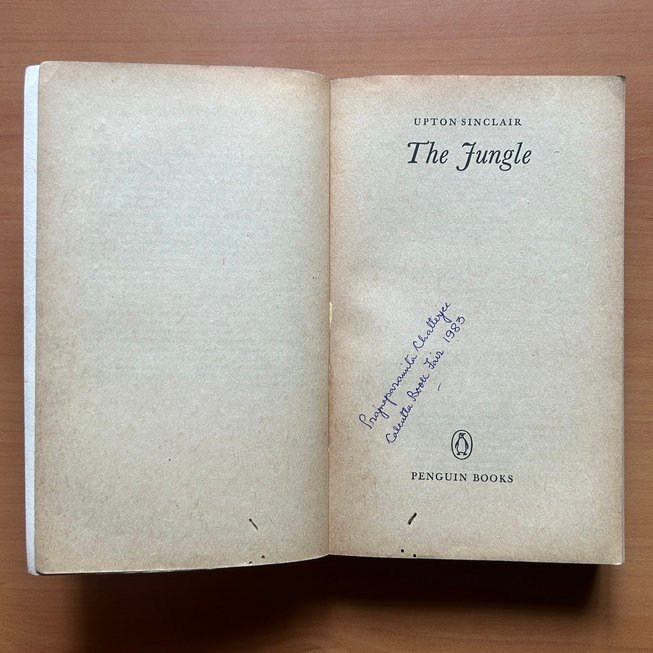
The Jungle
🔹 Author: Upton Sinclair
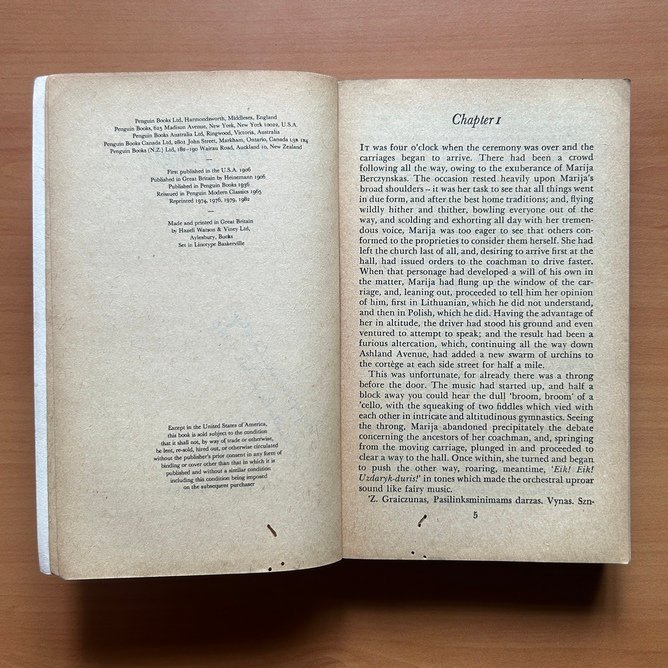
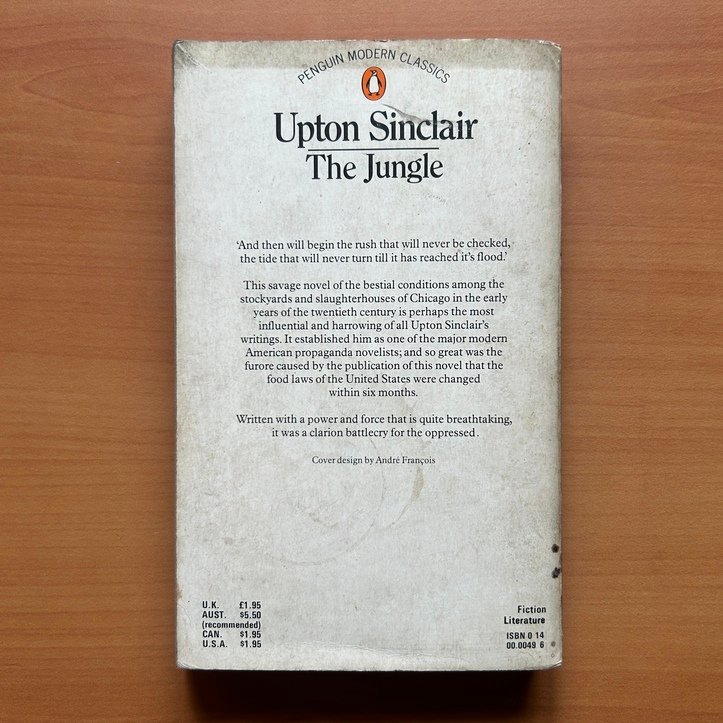
🔹 Publisher: Penguin Books
🔹 Edition: 1982
🔹 Binding: Paperback
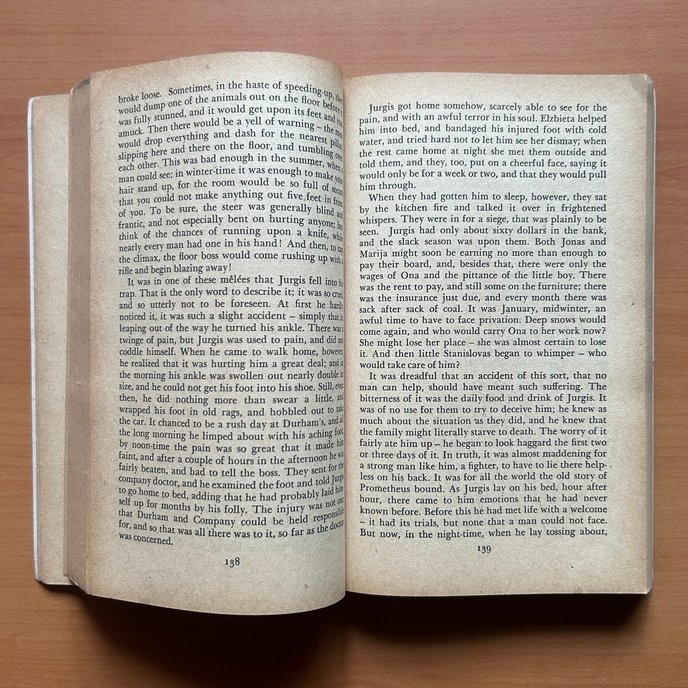
🔹 Pages: 400
🔹 Size: 4.5 × 0.5 × 7 inches
🔹 Language: English
The Jungle by Upton Sinclair is one of the most important works of American social literature, offering a powerful and disturbing portrait of working-class life in the industrial United States. Set primarily within the meatpacking district of Chicago, the novel follows the struggles of immigrant workers whose hopes for prosperity and security collide with the harsh realities of poverty, exploitation, and industrial capitalism.
At the center of the story is Jurgis Rudkus, a Lithuanian immigrant who arrives in America with his family believing that hard work will allow them to build a secure and prosperous future. Their hopes gradually come under pressure as they encounter low wages, dangerous working conditions, unemployment, debt, overcrowded housing, and the relentless demands of industrial labor.
Sinclair’s description of the meatpacking industry forms one of the most memorable aspects of the novel. Workers are treated as replaceable components within an enormous industrial system, while physical danger and economic insecurity dominate their lives. Through Jurgis and his family, Sinclair examines how poverty can become self-perpetuating when workers have little protection against exploitation and economic hardship.
The novel is notable for its strong social and political criticism. Sinclair investigates the relationship between industrial production, working-class poverty, corporate power, and labor conditions. His portrayal of immigrant workers also highlights the difficulties faced by newcomers attempting to establish themselves within an unfamiliar society.
Although The Jungle is a work of fiction, its social impact has extended far beyond literature. Sinclair’s descriptions of the meatpacking industry helped bring public attention to concerns about food production and industrial working conditions. The novel became an important part of the history of American social reform and contributed to wider public debates about labor, consumer protection, and corporate responsibility.
Another important aspect of the novel is its exploration of the American Dream. Jurgis and his family arrive in America with faith in the possibility of a better future, but their experiences challenge the assumption that determination and hard work alone guarantee success. Sinclair uses their struggles to question the economic and social structures that determine who has access to security and opportunity.
The book also offers a valuable historical picture of early twentieth-century America. Its depiction of immigrant communities, industrial cities, labor relations, housing, and social inequality makes it an important source for readers interested in American social history as well as literature.
Published by Penguin Books in 1982, this paperback edition contains 400 pages and measures 4.5 × 0.5 × 7 inches. Its enduring reputation, historical significance, and powerful social commentary make it an essential volume for readers and collectors interested in American literature, social realism, labor history, immigration, and classic political fiction.
- Written by Upton Sinclair
- Published by Penguin Books
- 1982 Edition
- Paperback binding
- 400 pages
- Size: 4.5 × 0.5 × 7 inches
- Language: English
- Landmark work of American social realism
- Set against the industrial world of early twentieth-century Chicago
- Explores poverty, immigration, labor, and exploitation
- Examines working-class life and industrial capitalism
- Important work of social-reform literature
- Historically significant American novel
- Ideal for readers, students, historians, and collectors
🔹 Collector’s Note
This 1982 Penguin Books paperback edition of The Jungle is an important addition to collections of American literature, social history, labor studies, and political fiction. Upton Sinclair’s novel has remained significant not only for its literary qualities but also for its influence on public discussions surrounding industrial labor and consumer protection. Its powerful depiction of immigrant working-class life and social inequality makes it a particularly valuable classic for readers interested in the intersection of literature and American history.



Reviews
There are no reviews yet.