
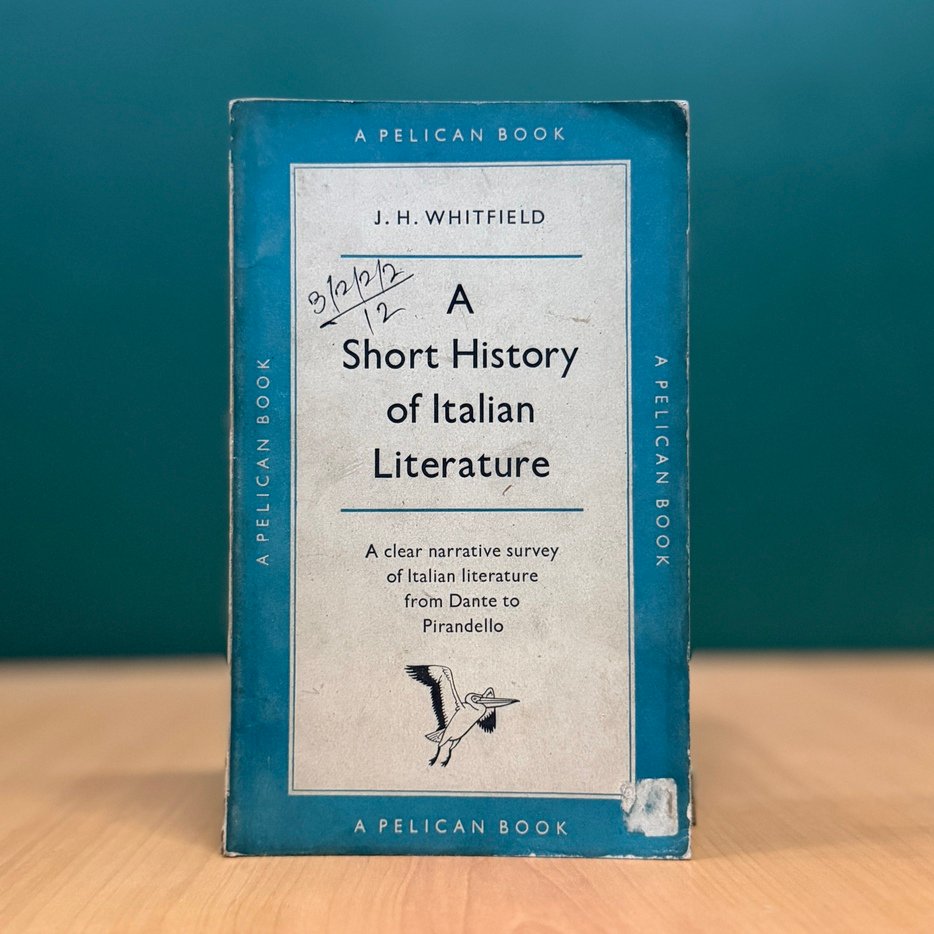
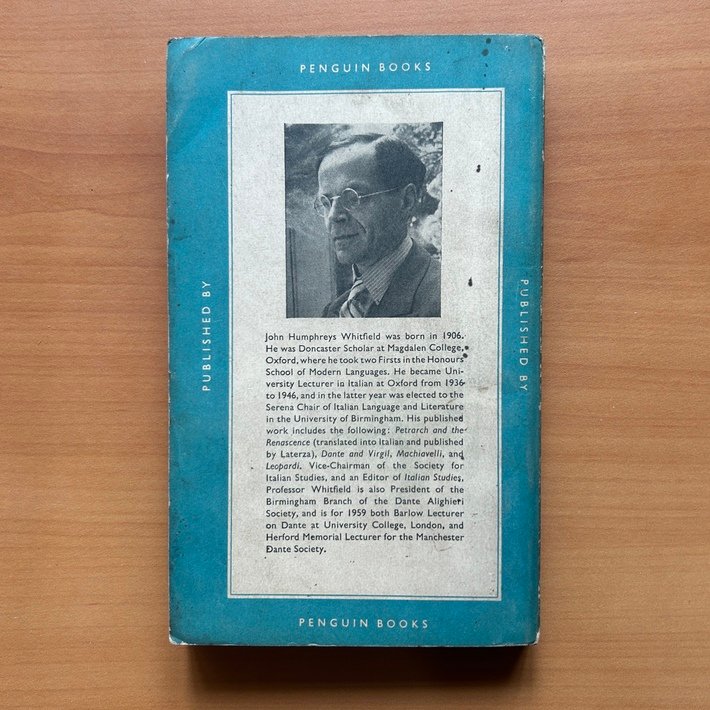
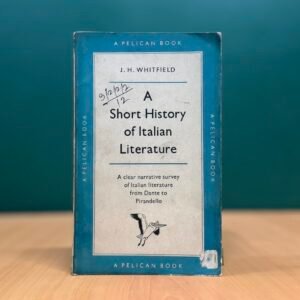
A Short History of Italian Literature
🔹 Author: J. H. Whitfield
🔹 Publisher: Penguin Books – Pelican Books
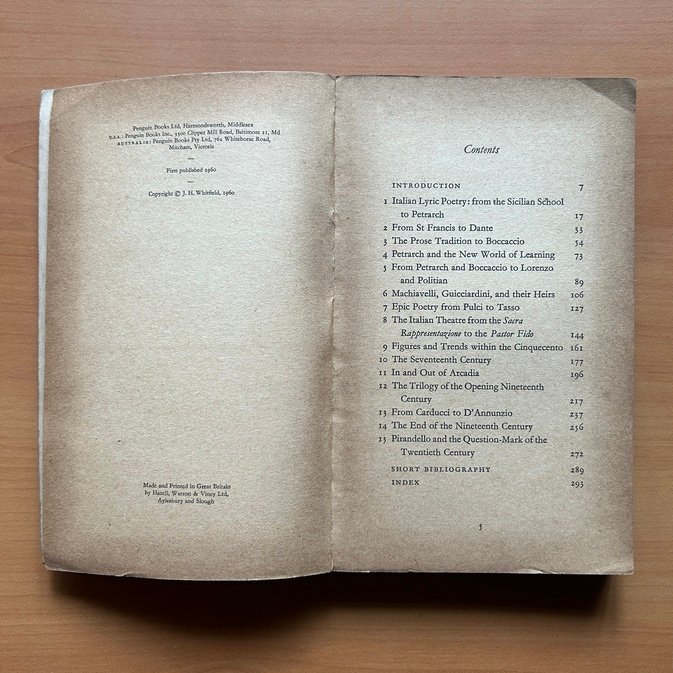
🔹 Edition: First Edition, 1960
🔹 Binding: Paperback
🔹 Pages: 300
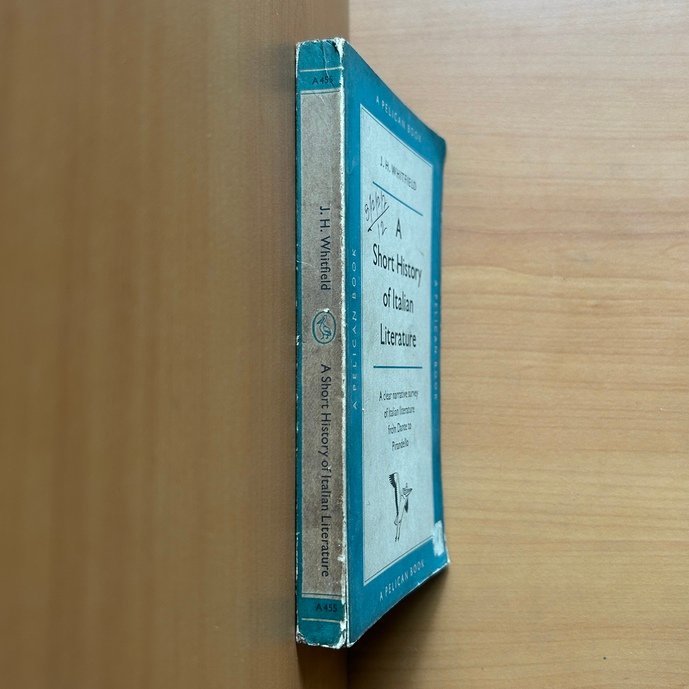
🔹 Size: 4.5 × 0.5 × 7 inches
🔹 Language: English
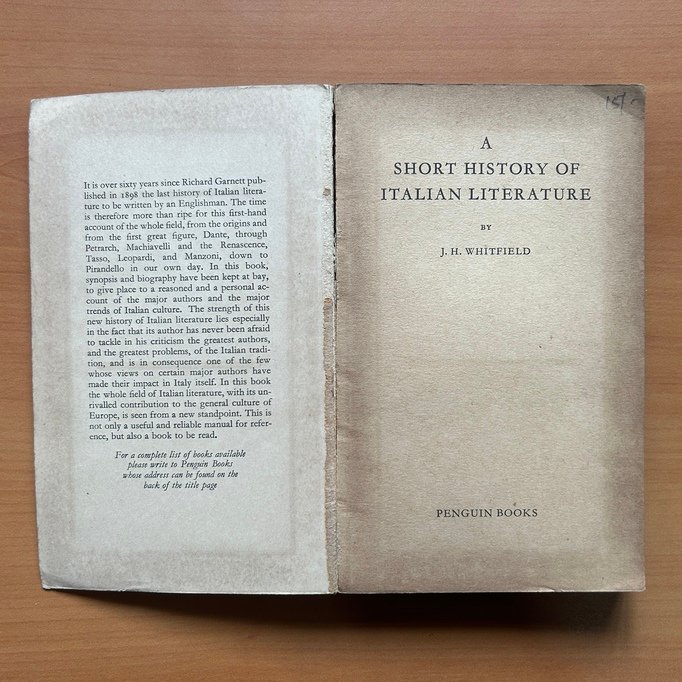
A Short History of Italian Literature by J. H. Whitfield provides readers with an accessible overview of the rich and influential literary tradition of Italy. Spanning centuries of cultural and intellectual development, the book introduces the major periods, movements, authors, and ideas that have shaped Italian literature and its important place within European literary history.
Italian literature has played a central role in the development of Western culture. From medieval religious writing and early vernacular poetry to the extraordinary literary achievements of the Renaissance, Italian writers have repeatedly influenced European thought, language, art, and literature. Whitfield’s study provides readers with a historical framework through which these developments can be understood.
The book is particularly relevant to the study of major literary figures associated with the formation of Italian literary culture. Writers such as Dante, Petrarch, and Boccaccio helped establish Italian as a major literary language, while Renaissance authors and thinkers further expanded the possibilities of Italian prose, poetry, drama, and intellectual writing.
The development of Italian literature cannot be separated from the country’s broader history. Political fragmentation, city-state culture, religious influence, the Renaissance, changing forms of education, and later movements toward national identity all contributed to the evolution of Italian writing. Literature frequently reflected these transformations, giving readers insight into the changing values and concerns of Italian society.
Whitfield’s historical approach makes the book particularly useful for readers who want to understand literature within its cultural context. Rather than treating individual writers as isolated figures, a literary history can reveal connections between authors, movements, political circumstances, philosophical ideas, and changing forms of artistic expression.
The book also provides an important introduction to the transition from medieval and Renaissance literature toward later developments in Italian writing. As literary styles and cultural priorities changed, Italian authors experimented with new forms of fiction, poetry, drama, criticism, and political writing. These developments eventually contributed to the emergence of modern Italian literature.
As part of the Pelican Books tradition, the volume was designed to make serious intellectual subjects accessible to a broad reading audience. Its relatively compact format and systematic approach make it useful both as an introduction and as a reference for readers beginning their study of Italian literature.
Published as a First Edition in 1960, this paperback contains 300 pages and measures 4.5 × 0.5 × 7 inches. It is an attractive vintage academic volume for readers and collectors interested in Italian literature, European literary history, Renaissance culture, and classic Penguin Pelican publications.
- Written by J. H. Whitfield
- Published under the Pelican Books imprint
- First Edition, 1960
- Paperback binding
- 300 pages
- Size: 4.5 × 0.5 × 7 inches
- Language: English
- Historical overview of Italian literature
- Covers major periods and literary developments
- Discusses the relationship between literature and Italian cultural history
- Relevant to medieval, Renaissance, and modern Italian literature
- Useful for students, researchers, and literature enthusiasts
- Collectible vintage Pelican paperback
🔹 Collector’s Note
This First Edition (1960) Pelican paperback of A Short History of Italian Literature is an appealing vintage academic title for collectors of literary history, European literature, and Penguin Pelican books. J. H. Whitfield’s historical approach provides a useful introduction to the development of Italian literary culture and its influence on European intellectual history. Its first-edition status and classic Pelican format make it a worthwhile addition to collections devoted to literary scholarship and cultural history.
Reviews
There are no reviews yet.