
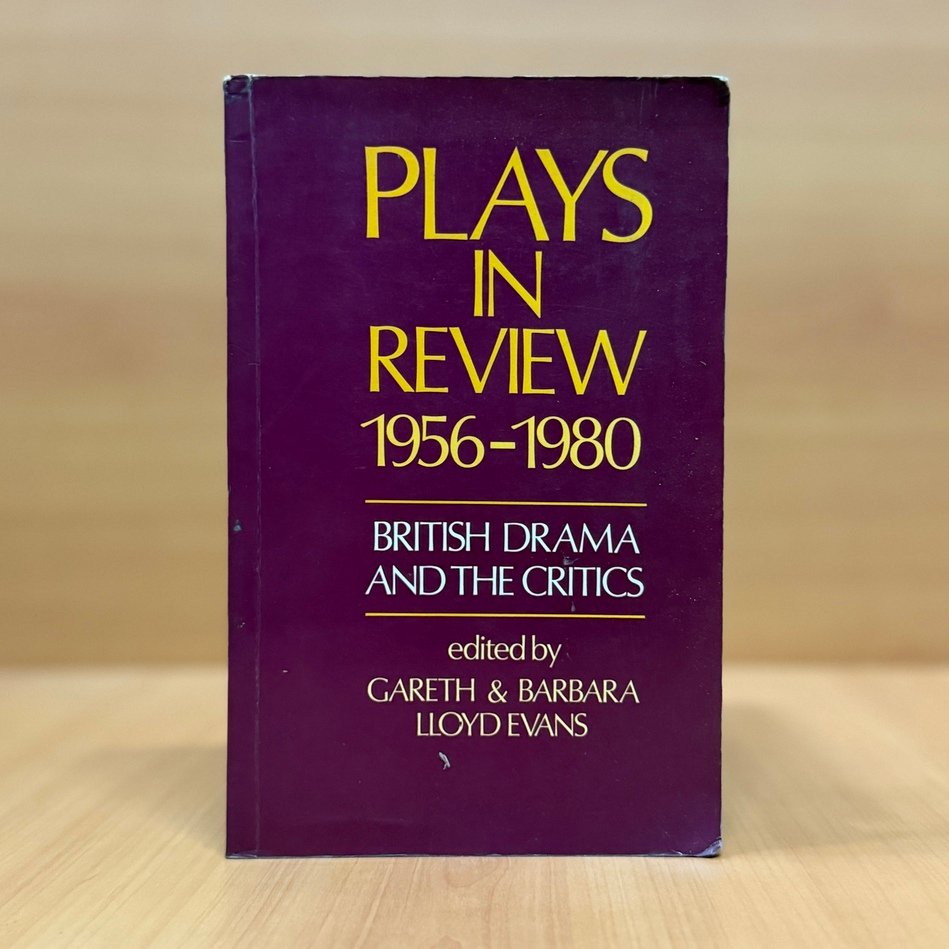
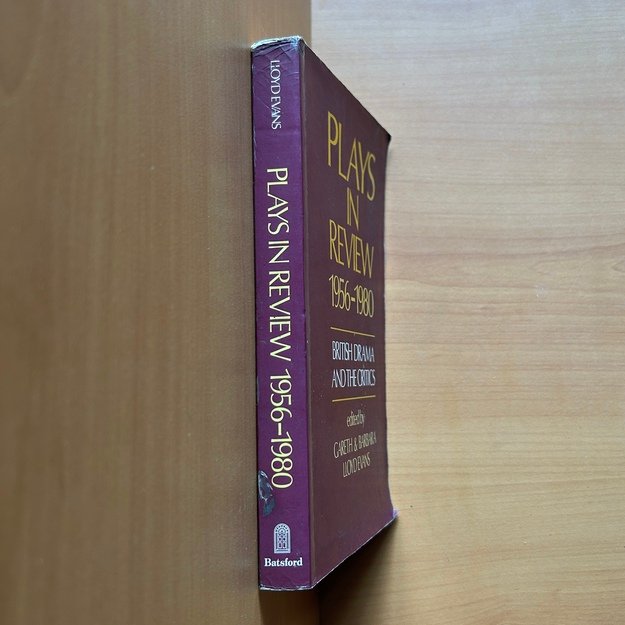
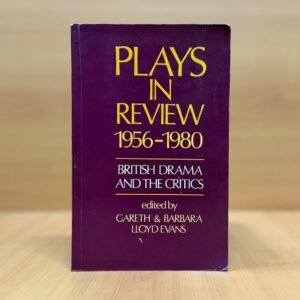
Plays in Review 1956–1980: British Drama and the Critics
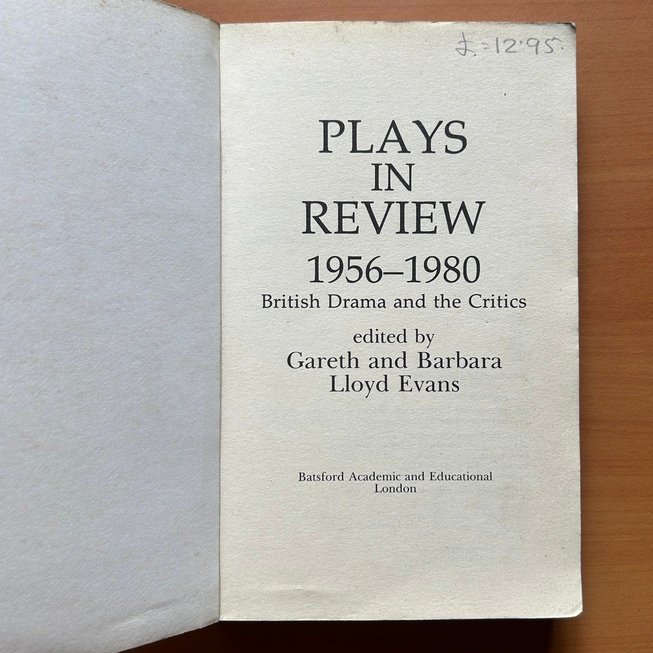
🔹 Editors: Gareth Evans, Barbara Evans & Lloyd Evans
🔹 Publisher: Batsford Academic and Educational
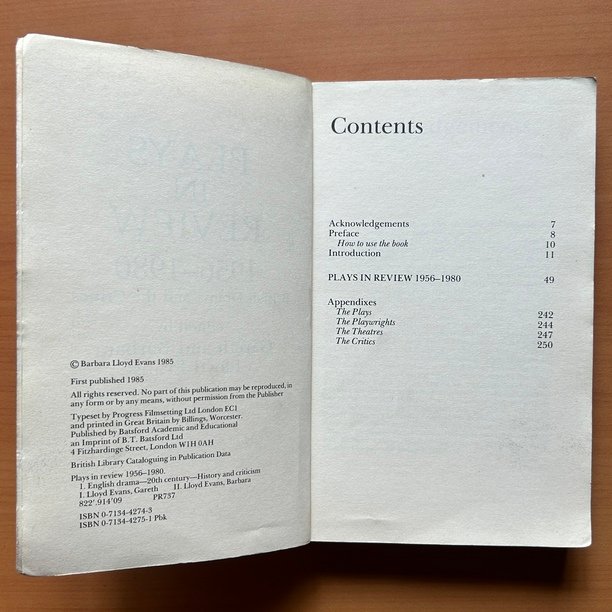
🔹 Edition: First Edition, 1985
🔹 Binding: Paperback
🔹 Pages: 256
🔹 Size: 6 x 2 x 9in
🔹 Language: English
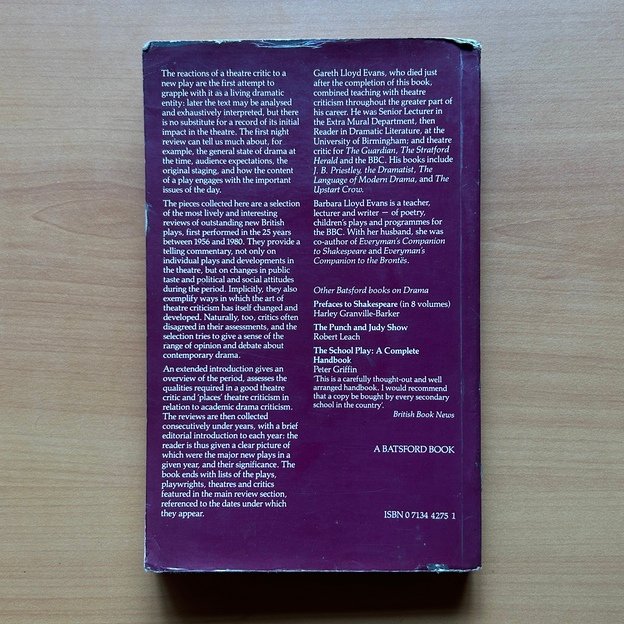
Plays in Review 1956–1980: British Drama and the Critics provides a valuable critical and historical perspective on British drama during a period of major theatrical change. Edited by Gareth Evans, Barbara Evans, and Lloyd Evans, the volume brings together material concerned with the relationship between British plays and the critics who reviewed and interpreted them.
The period covered by the book, from 1956 to 1980, encompasses an important chapter in the history of British theatre. The decades following the Second World War witnessed significant changes in theatrical writing, performance, audiences, stage production, and critical attitudes. New playwrights and new dramatic styles challenged established conventions and contributed to a rapidly evolving British theatrical culture.
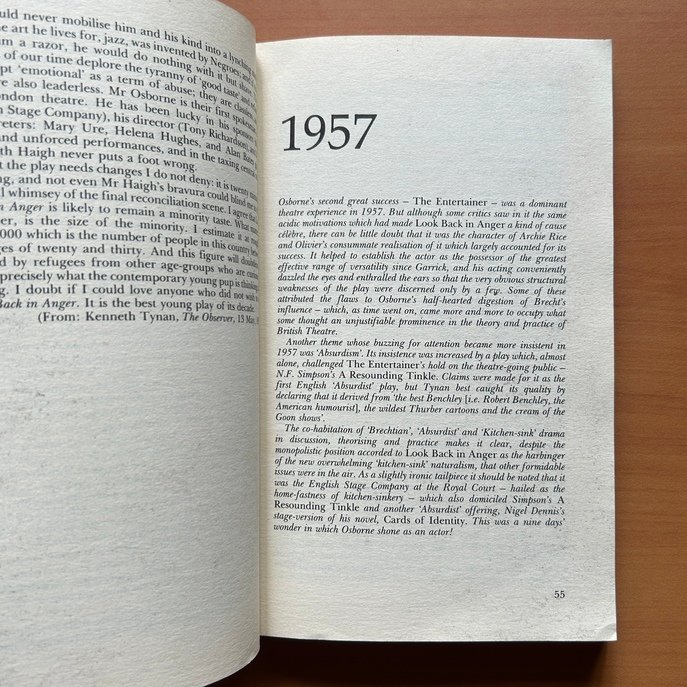
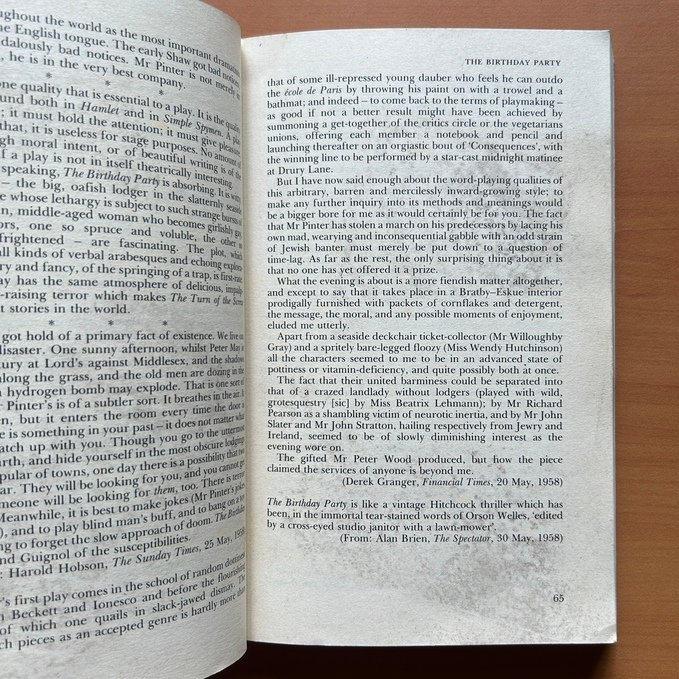
The role of the theatre critic is central to the book’s subject. Reviews do more than simply judge whether a play is successful or unsuccessful. They can reveal how audiences and critics responded to new ideas, theatrical techniques, social subjects, performances, and changing attitudes toward drama.
By examining British drama through the responses of critics, the book provides a different approach to theatre history. Rather than presenting only the development of playwrights and plays, it also considers how those works were received, interpreted, discussed, and evaluated at the time.
The period covered includes the rise of influential forms of modern British drama and changing approaches to subjects such as class, family, politics, social identity, relationships, morality, and contemporary life. British theatre increasingly became a place where writers could examine the realities and tensions of modern society.
The book is particularly useful for students of dramatic literature and theatre criticism. Studying critical responses can help readers understand the difference between a play as a literary text and a play as a theatrical event. A production involves actors, directors, staging, design, audience response, and performance choices, all of which can influence how a work is understood.
The volume can also be used as a historical reference for examining the changing standards of theatrical criticism. Critical language, expectations, and assumptions evolve over time, and contemporary reviews can therefore reveal how theatre was understood during different periods.
With 256 pages, the book provides a substantial overview of British drama and criticism across more than two decades. It is particularly relevant to readers researching post-war British theatre, playwrights, dramatic criticism, theatre reviews, and the history of modern British drama.
Published by Batsford Academic and Educational as a First Edition in 1985, this paperback edition contains 256 pages. The supplied size information indicates a 6-inch dimension, with the remaining measurements not specified. It is an interesting vintage academic reference for collections devoted to British theatre and dramatic literature.
- Edited by Gareth Evans, Barbara Evans & Lloyd Evans
- Published by Batsford Academic and Educational
- First Edition, 1985
- Paperback binding
- 256 pages
- Supplied size: 6 inches (other dimensions not provided)
- Language: English
- Focuses on British drama from 1956–1980
- Examines plays through contemporary critical responses
- Covers theatre criticism and dramatic reception
- Useful for studying post-war British theatre
- Valuable reference for students and researchers
- Suitable for collectors of theatre history and British drama
🔹 Collector’s Note
This First Edition, 1985 paperback of Plays in Review 1956–1980: British Drama and the Critics is an interesting reference work for collectors of British theatre, dramatic literature, theatre criticism, and post-war cultural history. Its focus on the relationship between plays and their critical reception makes it particularly useful for understanding how modern British drama was discussed and interpreted during its formative decades.
Reviews
There are no reviews yet.