
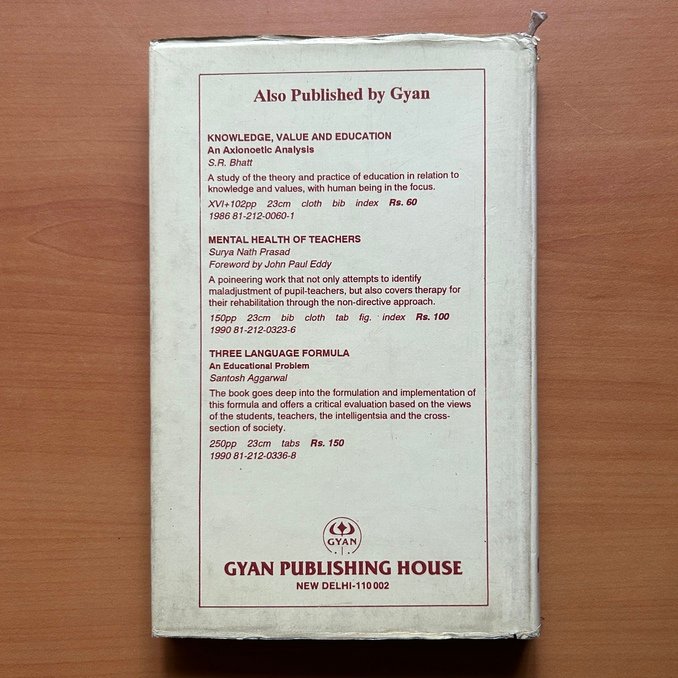
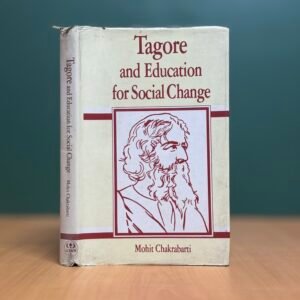
Tagore and Education for Social Change
Author: Mohit Chakrabarti
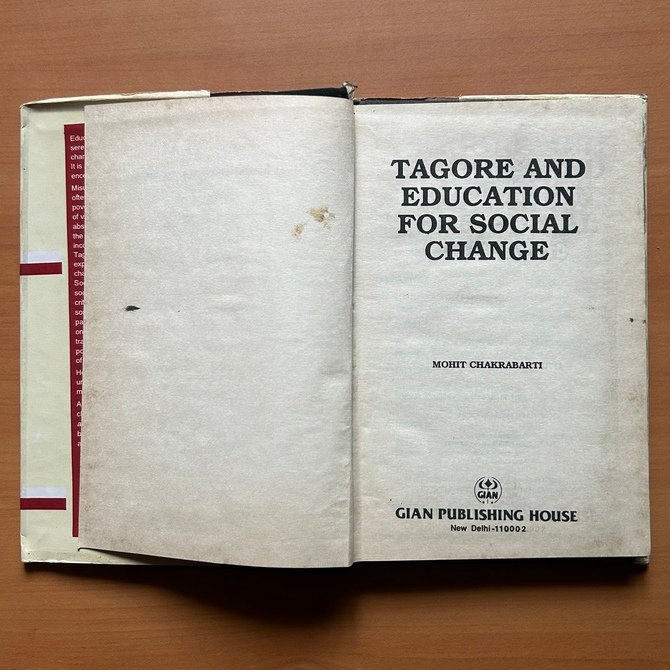
Publisher: Gian Publishing House
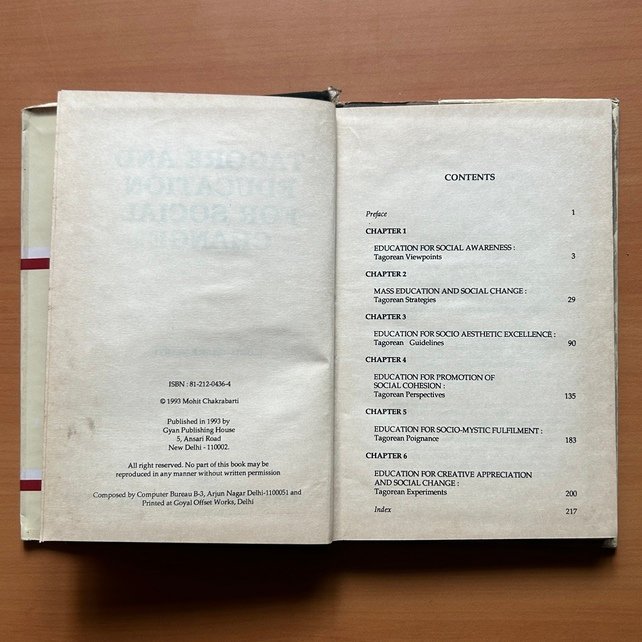
Edition: First Edition, 1993
Binding: Hardcover
Pages: 219
Size: 6 × 0.5 × 9 inches
Language: English
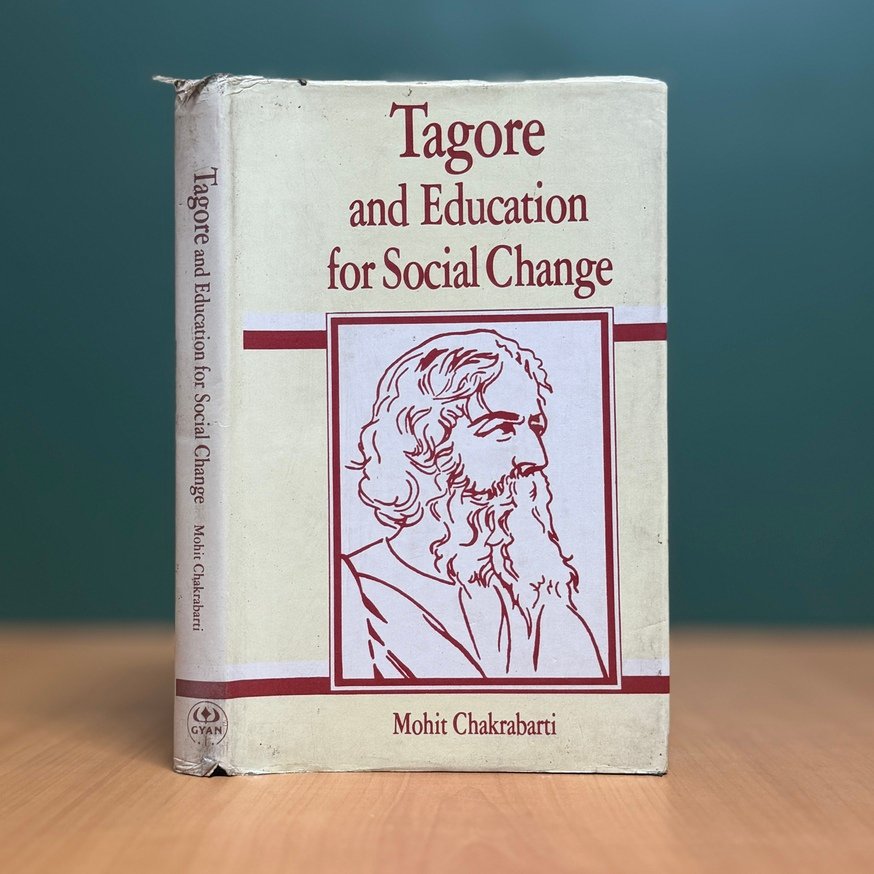
Tagore and Education for Social Change by Mohit Chakrabarti is a scholarly study of the educational ideas of Rabindranath Tagore and their potential role in transforming society.
Tagore was not only a poet, writer, artist, and philosopher but also an influential thinker about education and human development. His educational experiments were based on the belief that learning should extend beyond memorization and formal classroom instruction and should encourage creativity, freedom, nature, culture, and independent thought.
The book examines how Tagore understood education as an instrument of social and cultural development. For Tagore, education was closely connected with the development of the whole person rather than simply the acquisition of academic knowledge.
A central concern of Tagore’s educational philosophy was the relationship between the individual and society. He believed that education should help people develop their intellectual, emotional, creative, and moral capacities while encouraging a deeper understanding of the world around them.
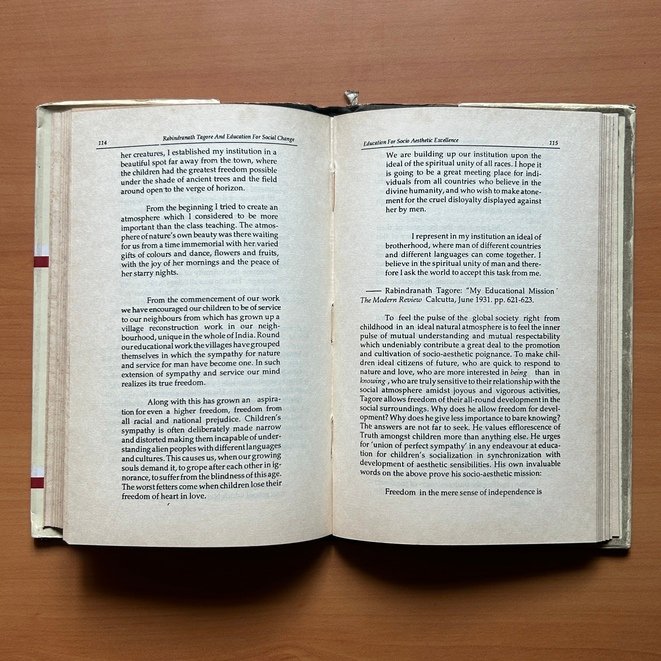
The book explores Tagore’s emphasis on freedom in education. He opposed excessively rigid systems that limited curiosity and imagination, favouring an environment in which students could learn through experience, creativity, observation, and interaction with nature.
Tagore’s educational vision was also strongly connected to Indian culture and global understanding. His educational institutions sought to bring together Indian traditions and international intellectual influences, encouraging students to develop a broad understanding of different cultures.
The idea of social change is particularly important to the book. Education, from this perspective, is not merely a means of improving individual careers; it can influence society by developing people capable of independent thinking, cooperation, creativity, and social responsibility.
The book is also relevant to the study of Santiniketan and Visva-Bharati, institutions closely associated with Tagore’s educational experiments. These institutions represented his attempt to create an alternative educational environment based on cultural openness, learning in close relationship with nature, and intellectual freedom.
For students of education, Tagore provides an important alternative to purely examination-oriented approaches to learning. His ideas continue to attract interest because they address questions concerning creativity, freedom, holistic education, cultural identity, internationalism, and the social purpose of education.
Mohit Chakrabarti’s study is therefore relevant not only to Tagore specialists but also to researchers examining the history of Indian education and the development of educational philosophy in modern India.
Published by Gian Publishing House as a First Edition in 1993, this hardcover edition contains 219 pages and measures approximately 6 × 0.5 × 9 inches. It is a compact academic volume suitable for collections focused on Indian intellectual history, education, Tagore studies, and social thought.
- Written by Mohit Chakrabarti
- Focuses on Rabindranath Tagore’s educational philosophy
- Published by Gian Publishing House
- First Edition, 1993
- Hardcover binding
- 219 pages
- Size: 6 × 0.5 × 9 inches
- Language: English
- Examines education as a force for social change
- Explores Tagore’s educational ideas
- Discusses creativity, freedom, and holistic education
- Examines the relationship between education and society
- Relevant to Indian educational history
- Suitable for Tagore and Indian philosophy collections
- Appealing First Edition Collectible
🔹 Collector’s Note
This First Edition, 1993 hardcover is a valuable academic title for collections devoted to Rabindranath Tagore, Indian education, Indian intellectual history, and Rare Indian Books. Its focused examination of Tagore’s educational philosophy and the role of education in social change makes it particularly useful for students, researchers, and collectors interested in India’s educational and cultural heritage.



Reviews
There are no reviews yet.