
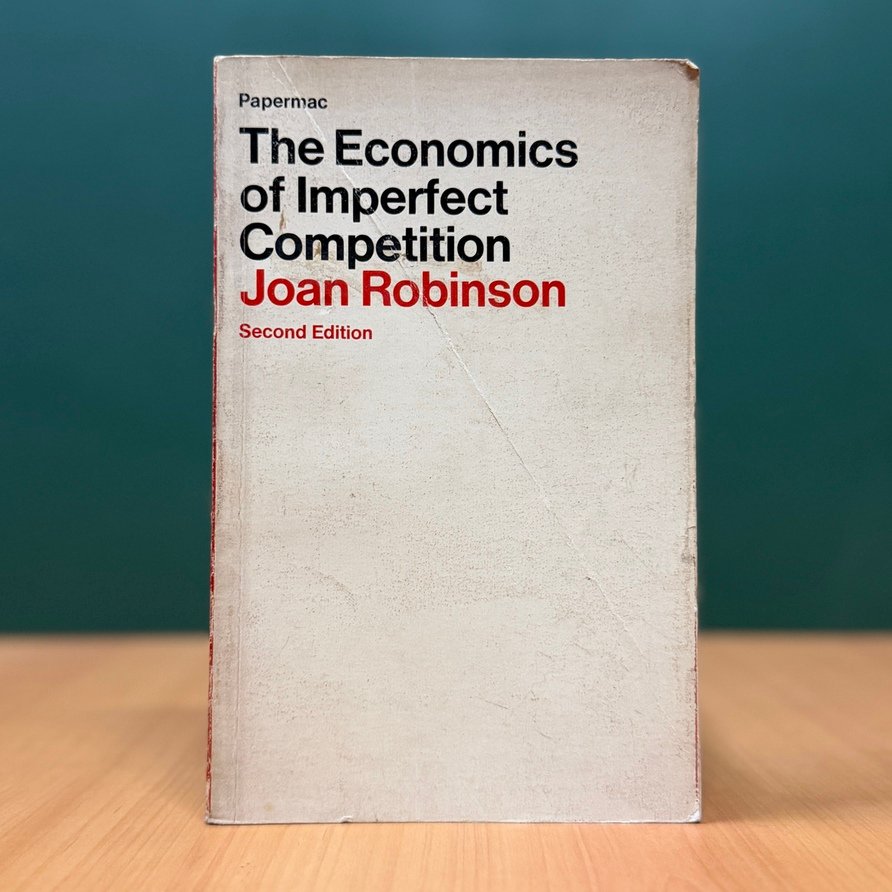

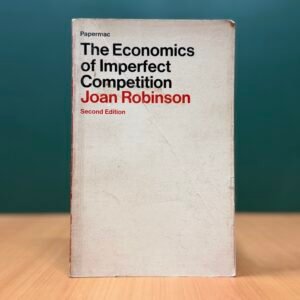
The Economics of Imperfect Competition
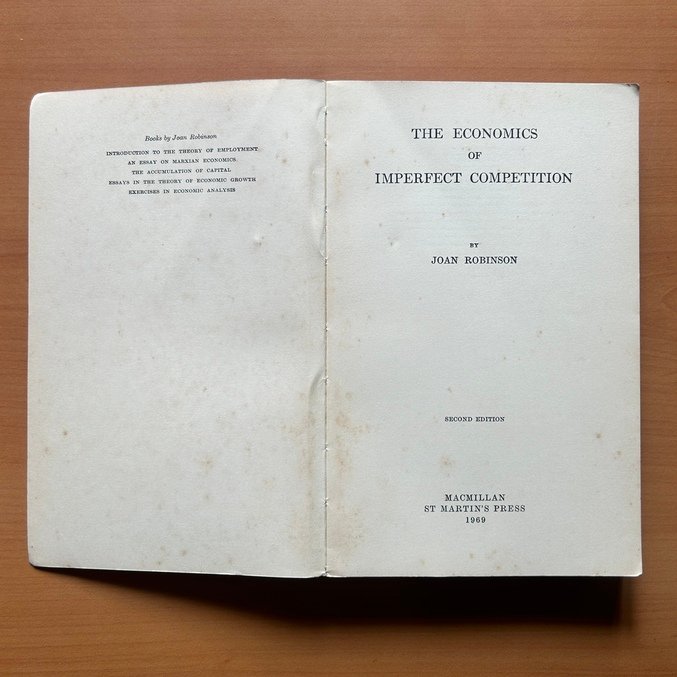
🔹 Author: Joan Robinson
🔹 Publisher: Macmillan / St. Martin’s Press
🔹 Edition: 1969
🔹 Binding: Paperback
🔹 Pages: 332
🔹 Size: 5.5 × 1 × 8.6 inches
🔹 Language: English
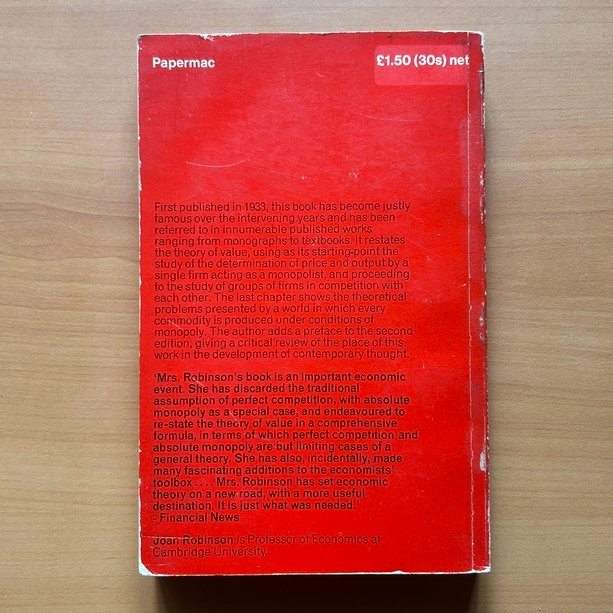
Written by the distinguished British economist Joan Robinson, The Economics of Imperfect Competition is widely regarded as one of the most significant contributions to twentieth-century economic theory. Originally published in the 1930s, the book revolutionized the field of microeconomics by introducing a systematic framework for understanding markets in which firms possess varying degrees of market power. This 1969 paperback edition, published by Macmillan / St. Martin’s Press, continues to present Robinson’s pioneering ideas that remain fundamental to the study of economics today.
At a time when much of economic theory focused on perfectly competitive markets, Robinson argued that real-world industries operate under conditions of imperfect competition, where businesses influence prices, differentiate products, and compete through strategies beyond simple price adjustments. She examined how monopolies, oligopolies, and monopolistic competition affect production, pricing, wages, employment, and the allocation of resources. Her analytical approach challenged conventional economic assumptions and provided economists with new tools for understanding actual market behavior.
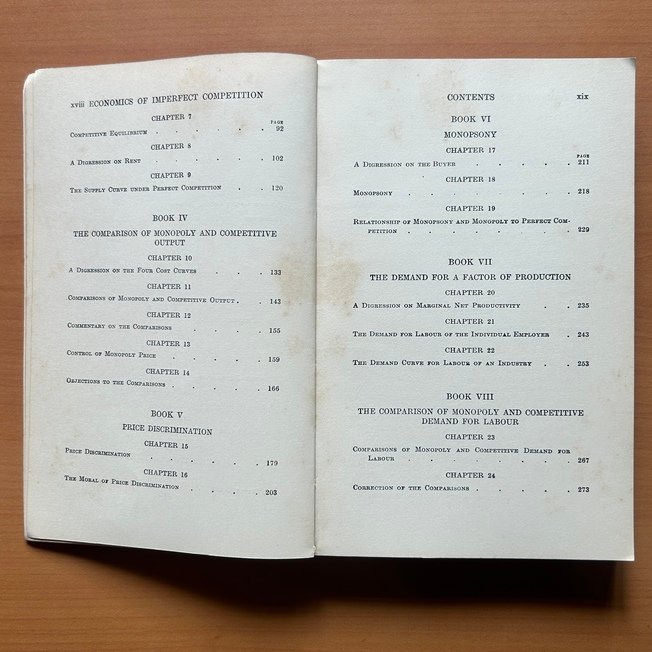
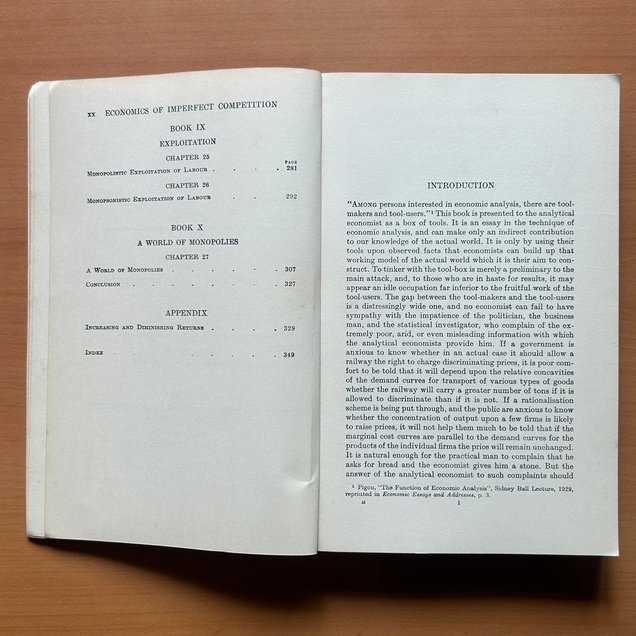
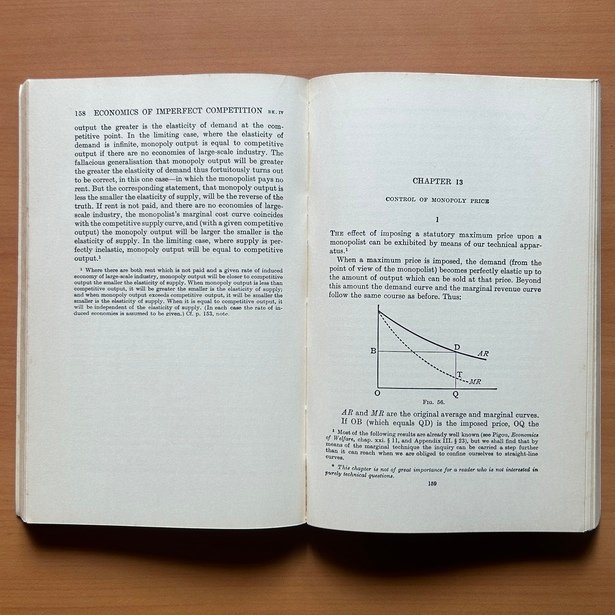
The book explores a wide range of subjects, including price discrimination, monopoly power, market equilibrium, consumer demand, production costs, labor markets, and income distribution. Robinson carefully demonstrates how firms make decisions when competition is limited and explains the broader economic consequences of these market structures. Her work laid the intellectual foundation for many later developments in industrial organization, competition policy, welfare economics, and regulatory economics.
One of the enduring strengths of The Economics of Imperfect Competition is its ability to combine rigorous theoretical analysis with practical relevance. Many of the issues Robinson examined—such as corporate market power, pricing strategies, barriers to entry, and economic efficiency—remain central to discussions of modern economies. As a result, the book continues to be widely read by economists, university students, policymakers, and researchers interested in understanding the complexities of contemporary markets.
Published by Macmillan / St. Martin’s Press in 1969, this paperback edition contains 332 pages and measures 5.5 × 1 × 8.6 inches. It remains an essential reference for students of economics and an important historical document in the evolution of modern economic thought. Whether studied for academic purposes or collected as a landmark work in economic literature, this volume represents one of Joan Robinson’s greatest intellectual achievements.
- Written by renowned economist Joan Robinson
- Published by Macmillan / St. Martin’s Press
- 1969 Paperback Edition
- Paperback binding
- 332 pages
- Size: 5.5 × 1 × 8.6 inches
- Language: English
- Classic work on microeconomics and market theory
- Introduces the theory of imperfect competition
- Explores monopoly, oligopoly, pricing, and market behavior
- Essential reference for economics students, researchers, and academics
- Landmark contribution to twentieth-century economic thought
🔹 Collector’s Note
This 1969 paperback edition of The Economics of Imperfect Competition by Joan Robinson is an important collectible in the field of economic literature. Recognized as one of the foundational texts of modern microeconomics, the book transformed the understanding of market structures and continues to influence economic theory and public policy. Published by Macmillan / St. Martin’s Press, this edition is a valuable addition to collections of economics, political economy, and the history of social science, appealing to scholars, students, and collectors of classic academic works.



Reviews
There are no reviews yet.