

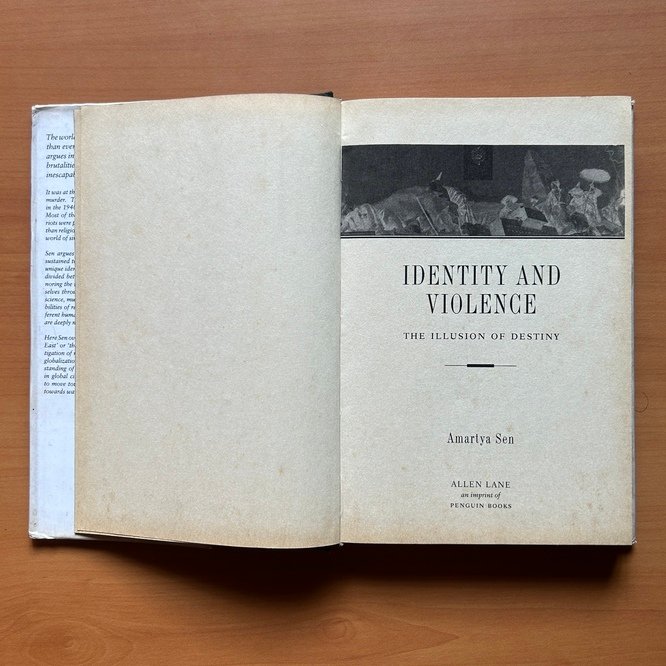

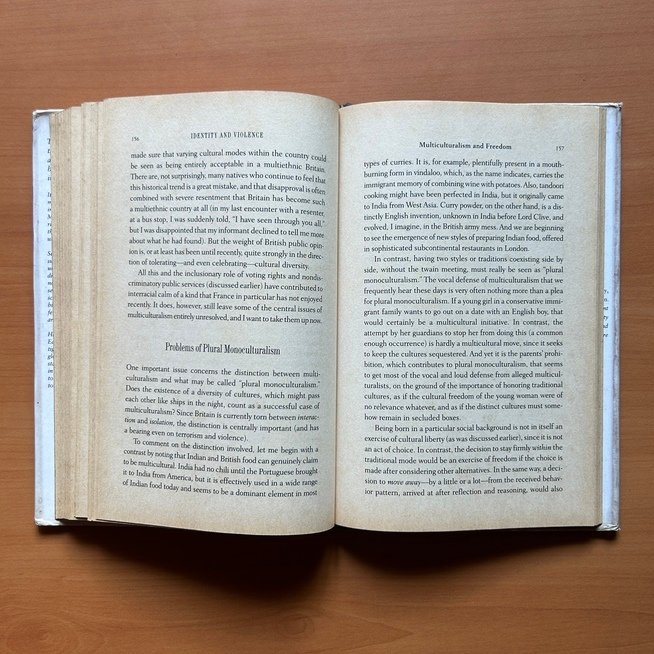

Identity and Violence: The Illusion of Destiny
🔹 Author: Amartya Sen
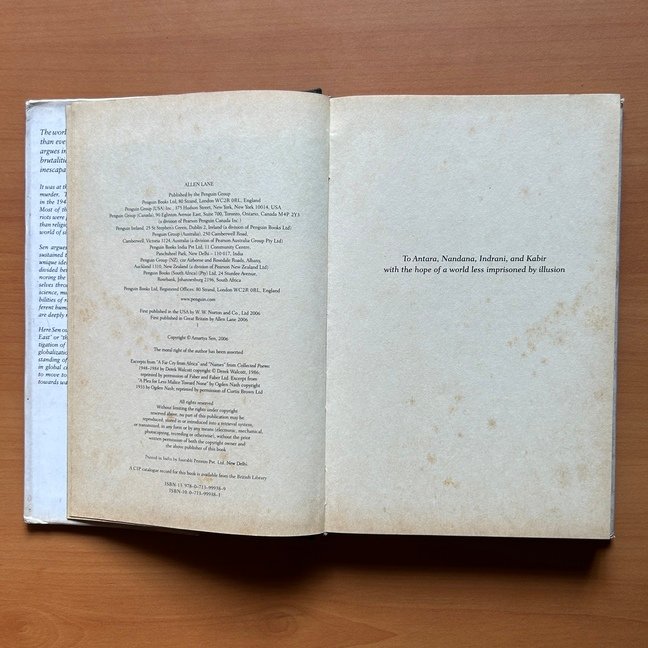
🔹 Publisher: Penguin Books
🔹 Edition: First Edition, 2006
🔹 Binding: Hardcover
🔹 Pages: 208
🔹 Size: 6 × 0.5 × 9 inches
🔹 Language: English
Identity and Violence: The Illusion of Destiny is a significant work by Amartya Sen, the Indian economist and philosopher whose writings have extensively examined questions of justice, freedom, development, human welfare, and social choice. In this book, Sen turns his attention to the complicated relationship between identity and violence, questioning the assumption that individuals naturally belong to one single, defining community.
A central argument of the book concerns the danger of reducing people to a single category. Individuals simultaneously possess many identities: they may identify through nationality, profession, language, family, political beliefs, interests, education, culture, or other aspects of their lives. Sen argues that treating one identity as the person’s entire identity can create artificial divisions between groups.
The book examines how identity politics can become particularly powerful when people are encouraged to see themselves primarily as members of opposing communities. When complex individual identities are reduced to simple categories of “us” and “them,” differences that might otherwise be manageable can become sources of hostility.
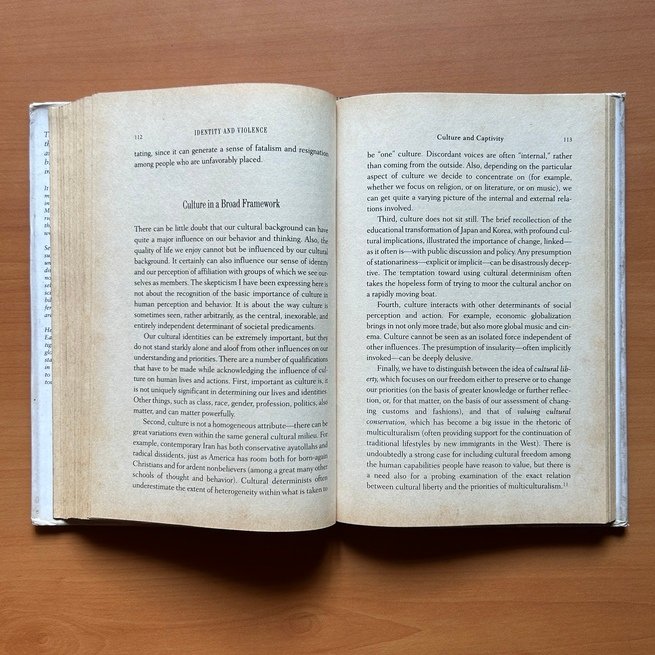
Sen’s discussion is especially relevant to questions involving religion, nationality, ethnicity, culture, and political affiliation. He challenges the idea that conflict between communities is inevitable simply because people belong to different cultural or religious traditions. Instead, he emphasizes the importance of individual choice and the recognition of multiple identities.
The concept of the “illusion of destiny” refers to the mistaken belief that people are naturally destined to belong to one particular group or that their behaviour can be predicted entirely from that group identity. Sen argues that such assumptions overlook the complexity of individual lives and the choices people make.
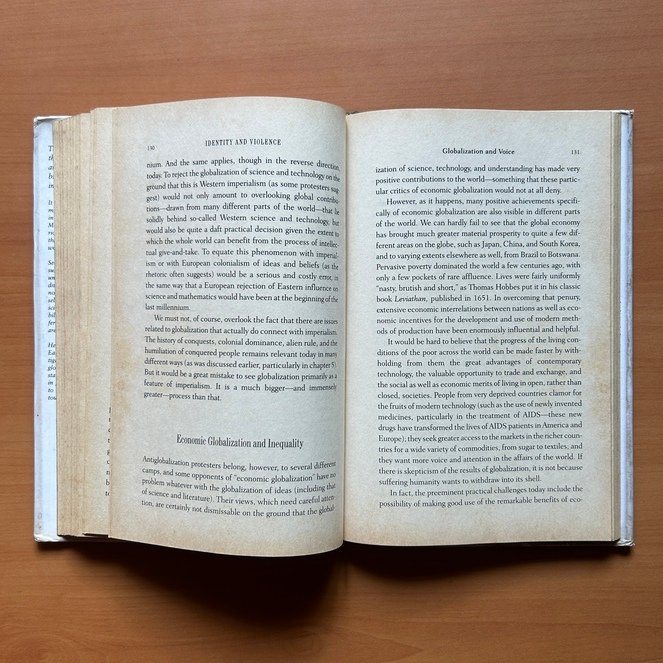
Another important theme is the relationship between identity and global politics. In an increasingly interconnected world, people interact across national, cultural, and religious boundaries. Recognizing shared interests and multiple affiliations can therefore play an important role in reducing unnecessary divisions.
The book also explores the role of reason and public discussion in dealing with social differences. Sen emphasizes the importance of allowing individuals to make choices about how they understand themselves rather than imposing a single identity upon them.
These ideas have broad implications for the study of democracy, multiculturalism, human rights, social conflict, and international relations. The book encourages readers to consider whether conflicts commonly described as inevitable clashes between cultures or civilizations might instead be intensified by political and social constructions of identity.
Sen’s approach combines philosophical reasoning with examples drawn from history, politics, and contemporary society. The result is a work that is accessible to general readers while also providing substantial material for students and researchers in the social sciences and humanities.
Published by Penguin Books as a First Edition in 2006, this hardcover edition contains 208 pages and measures 6 × 0.5 × 9 inches. It is an important addition to collections devoted to political philosophy, social thought, identity politics, multiculturalism, human rights, and contemporary history.
- Written by Amartya Sen
- Published by Penguin Books
- First Edition, 2006
- Hardcover binding
- 208 pages
- Size: 6 × 0.5 × 9 inches
- Language: English
- Examines the relationship between identity and violence
- Challenges the idea of a single, fixed personal identity
- Explores identity politics and social conflict
- Discusses religion, nationality, culture, and community
- Relevant to multiculturalism and human rights
- Examines the role of reason and individual choice
- Useful for students of politics, philosophy, and social science
- Important contemporary work by a Nobel Prize-winning economist and thinke
This First Edition, 2006 hardcover of Identity and Violence: The Illusion of Destiny is an important modern work by Amartya Sen for collections focused on political philosophy, social thought, identity, globalization, and contemporary political history. Its examination of how simplified ideas of identity can contribute to division and conflict gives the book continuing relevance to discussions of society and international affairs. With 208 pages, this Penguin Books edition is both accessible and substantial for readers, students, and collectors.


Reviews
There are no reviews yet.