
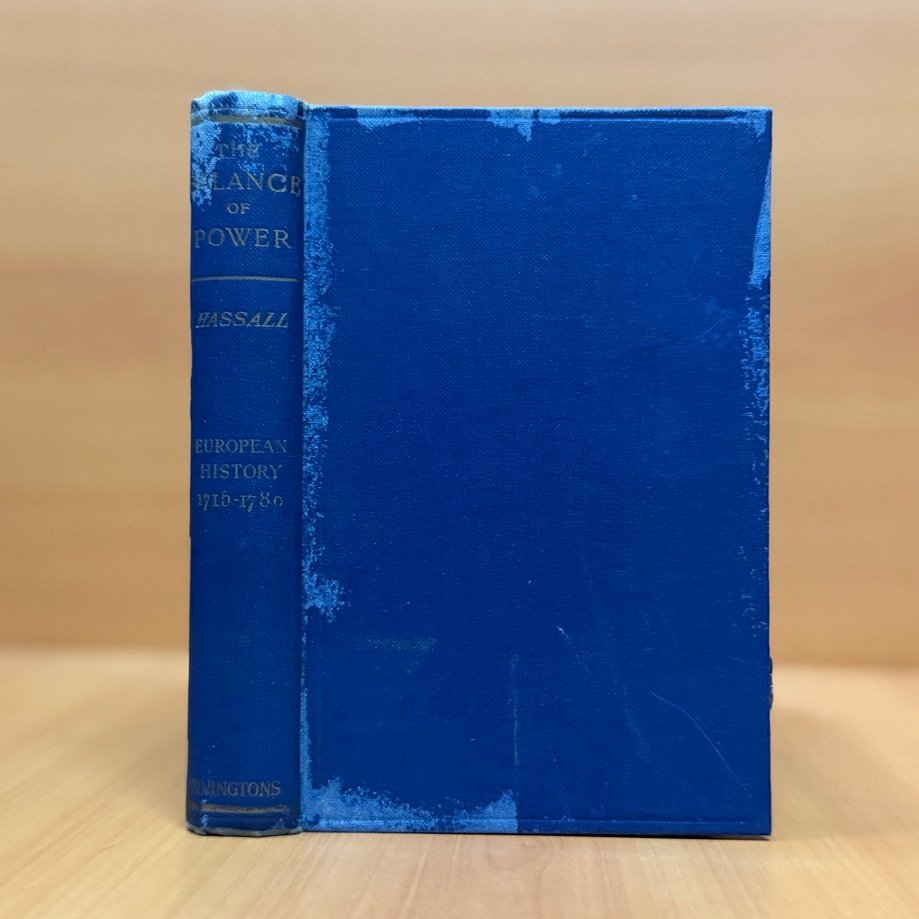
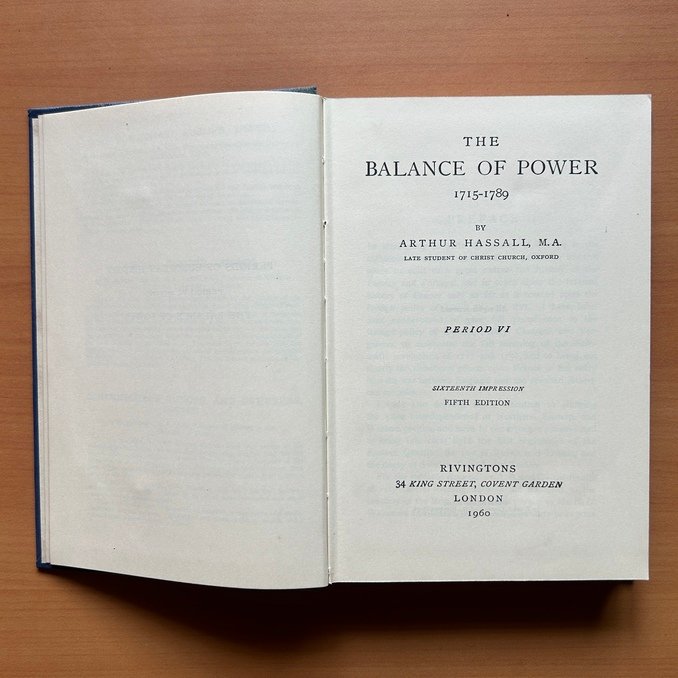
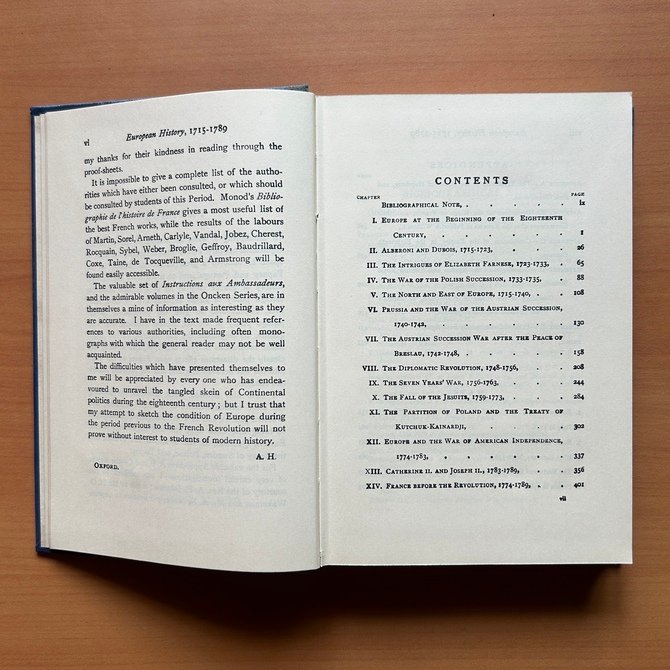
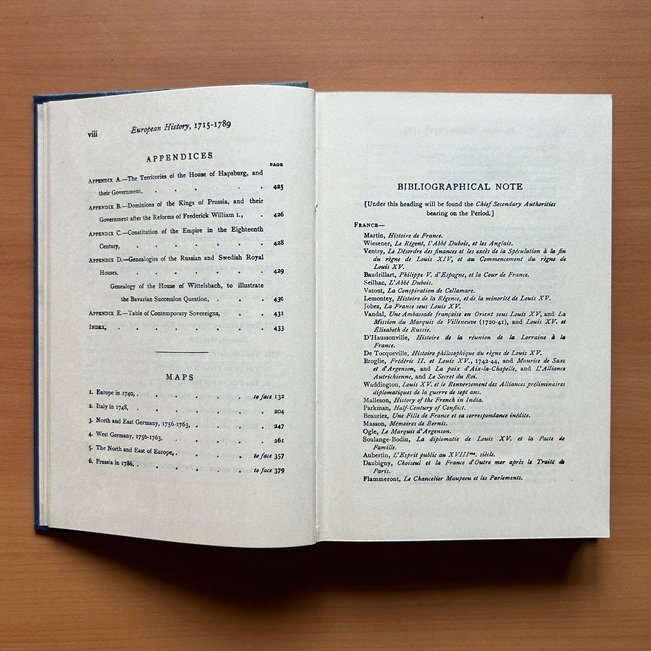
The Balance of Power, 1715–1789
🔹 Author: Arthur Hassall
🔹 Publisher: Rivingtons
🔹 Edition: 1960
🔹 Binding: Hardcover
🔹 Pages: 438
🔹 Size: 5 × 1 × 7.5 inches
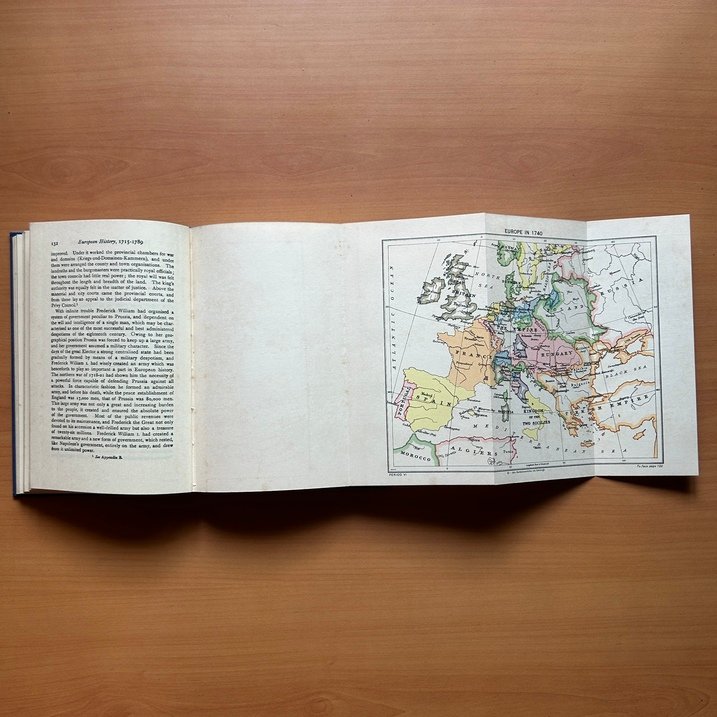
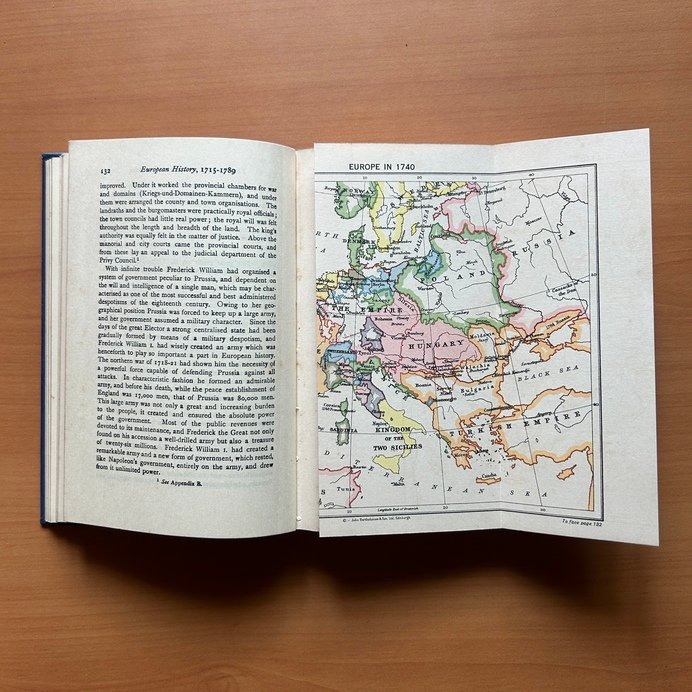
The Balance of Power, 1715–1789 by distinguished historian Arthur Hassall examines a crucial period in the development of modern European international relations. The eighteenth century was characterized by continuous competition among powerful states, shifting alliances, territorial ambitions, diplomatic negotiations, and military conflicts. Hassall’s study explores these developments through the central concept of the balance of power, a principle that played a defining role in European diplomacy.
Beginning in 1715, the book examines the political landscape that emerged following the major conflicts of the late seventeenth and early eighteenth centuries. European powers increasingly sought to prevent any single state from achieving overwhelming dominance. Alliances and diplomatic agreements consequently became essential tools through which governments attempted to protect their interests, maintain stability, and respond to the ambitions of rival powers.
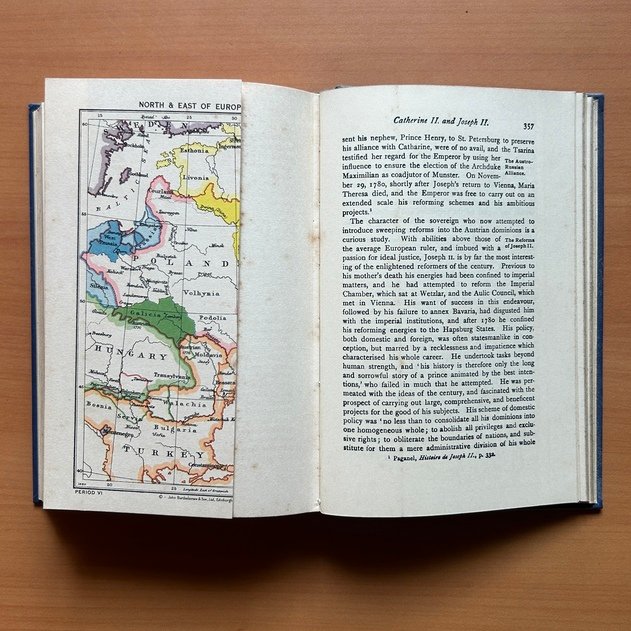
Throughout the period covered by the book, European politics underwent significant transformation. Britain, France, Austria, Prussia, Russia, and other states competed for influence across the continent and beyond. Diplomatic relationships were frequently reshaped by wars, dynastic interests, territorial disputes, economic considerations, and changing political priorities. Hassall provides readers with a historical framework for understanding these complex relationships and the events that repeatedly altered the European balance.
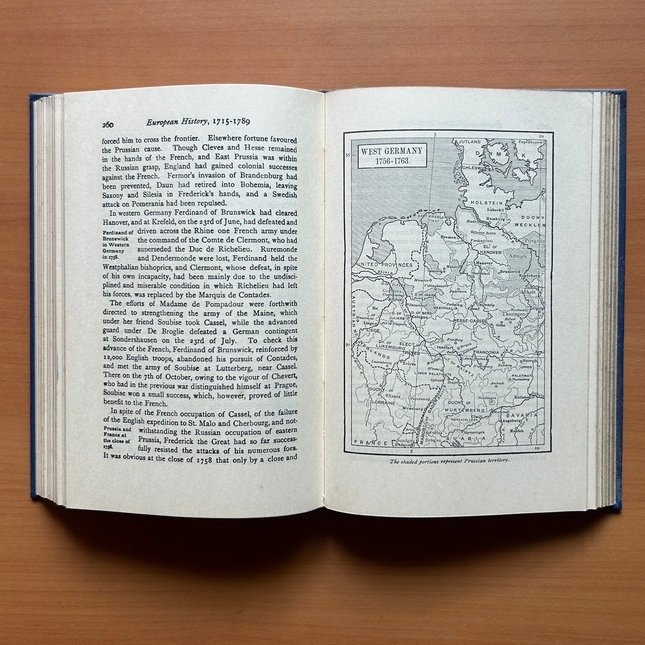
The book is particularly valuable for understanding the connection between diplomacy and warfare. In eighteenth-century Europe, military strength and diplomatic negotiation were closely connected, with governments frequently using alliances and treaties to strengthen their strategic position. The shifting balance among the major European powers also contributed to the emergence of new political forces and helped shape the international environment leading toward the French Revolution of 1789.
Beyond individual wars and political events, Hassall’s work provides a broader perspective on the development of European statecraft. It demonstrates how concepts such as national interest, territorial security, alliances, diplomacy, and political equilibrium influenced the decisions of governments and rulers. This makes the book useful not only as a historical narrative but also as an introduction to the origins of modern international relations.
Published by Rivingtons in 1960, this hardcover edition contains 438 pages and measures 5 × 1 × 7.5 inches. Its substantial historical content and focus on eighteenth-century diplomacy make it particularly suitable for readers interested in European history, political science, international relations, diplomatic history, and the origins of the modern European state system.
- Written by Arthur Hassall
- Published by Rivingtons
- 1960 Edition
- Hardcover binding
- 438 pages
- Size: 5 × 1 × 7.5 inches
- Language: English
- Covers European history from 1715 to 1789
- Examines the European balance of power
- Explores diplomacy, alliances, rivalries, and international relations
- Valuable study of eighteenth-century political history
- Useful for students, historians, researchers, and collectors
🔹 Collector’s Note
This 1960 hardcover edition of The Balance of Power, 1715–1789, published by Rivingtons, is a valuable addition to collections of European political history and diplomatic studies. Arthur Hassall’s examination of the shifting relationships among Europe’s major powers provides important context for understanding the political developments that shaped the continent before the French Revolution. Its classic hardcover format and substantial 438-page historical treatment make it an appealing volume for collectors of historical scholarship, European history, and international relations.




Reviews
There are no reviews yet.