


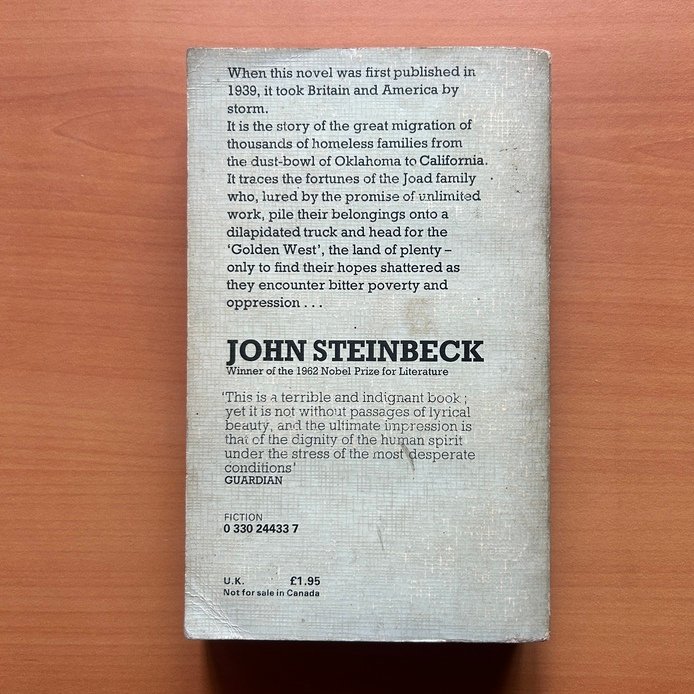
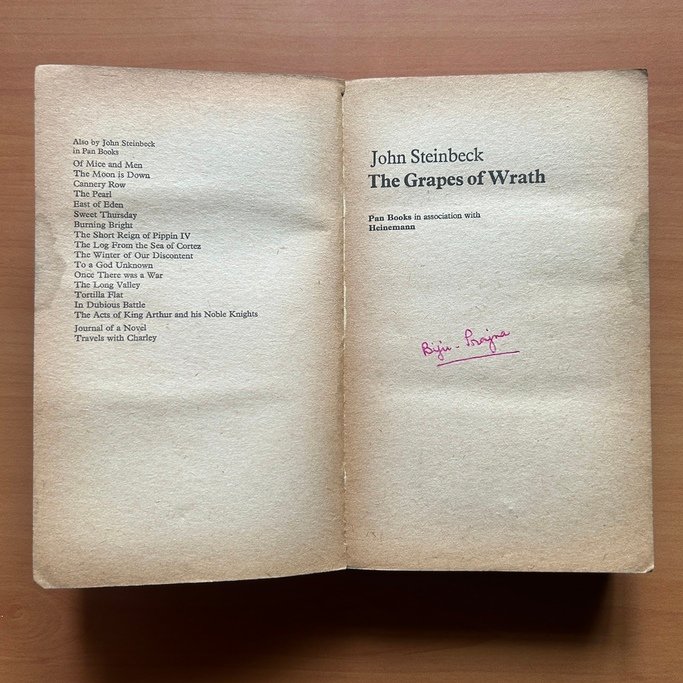
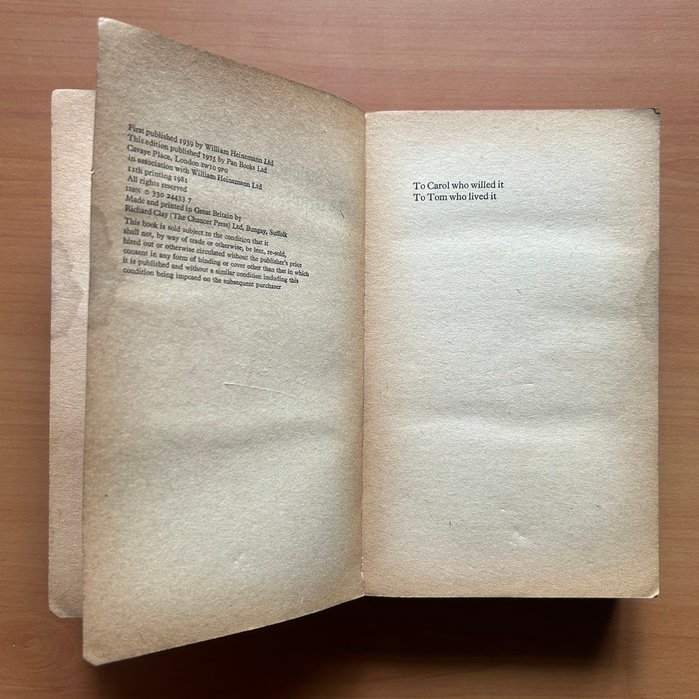
The Grapes of Wrath
🔹 Author: John Steinbeck
🔹 Publisher: Pan Books
🔹 Edition: 1975
🔹 Binding: Paperback
🔹 Pages: 268
🔹 Size: 4.5 × 1 × 7 inches
🔹 Language: English
The Grapes of Wrath by John Steinbeck is a landmark of twentieth-century American literature and one of the most powerful novels about economic hardship, migration, family, and social inequality. Set during the Great Depression, the novel follows the Joad family as they are driven from their Oklahoma home and embark on a difficult journey westward in search of work and a better life.
The Joad family’s story reflects the experiences of thousands of families affected by the economic and environmental crises of the 1930s. The Dust Bowl, agricultural hardship, loss of land, unemployment, and poverty forced many rural families to abandon their homes. California appeared to offer the possibility of employment and security, but the reality they encountered was often very different.
At the heart of the novel is the family’s journey and their determination to remain together despite increasingly difficult circumstances. Steinbeck explores the importance of family, solidarity, dignity, and resilience as the Joads confront poverty and uncertainty. Their experiences demonstrate how individuals and families can be affected by forces far beyond their control.
One of the novel’s most important themes is the relationship between workers and economic power. Upon reaching California, migrant families discover that employment is often uncertain and wages can be extremely low. Steinbeck examines how an oversupply of labor can allow employers to exploit desperate workers, creating a cycle of poverty that is difficult to escape.
The novel also explores the meaning of the American Dream. The Joads travel west believing that hard work will provide them with stability and opportunity, but they encounter economic systems that repeatedly undermine those hopes. Steinbeck uses their experiences to question whether prosperity and opportunity are equally accessible to everyone.
Steinbeck’s writing combines individual storytelling with a broader historical perspective. Alongside the Joad family’s personal experiences, the novel presents a wider portrait of Depression-era America, drawing attention to migration, unemployment, poverty, agricultural economics, and the social tensions created by economic inequality.
The novel’s enduring significance lies partly in its ability to connect individual suffering with broader social conditions. The Joads are not presented simply as victims of circumstance; their relationships, choices, determination, and sense of dignity make them memorable representatives of a much larger human experience.
Published by Pan Books in 1975, this paperback edition contains 268 pages and measures 4.5 × 1 × 7 inches. It is an excellent addition to collections of American literature, historical fiction, social realism, and books relating to the history of the Great Depression and the Dust Bowl.
- Written by John Steinbeck
- Published by Pan Books
- 1975 Edition
- Paperback binding
- 268 pages
- Size: 4.5 × 1 × 7 inches
- Language: English
- Landmark American novel
- Set during the Great Depression and Dust Bowl era
- Explores migration, poverty, labor, family, and social inequality
- Powerful portrayal of working-class American life
- Important example of American social realism
- Ideal for readers, students, historians, and collectors of classic literature
🔹 Collector’s Note
This 1975 Pan Books paperback edition of The Grapes of Wrath is a desirable addition to collections of American literature, social history, and classic twentieth-century fiction. Steinbeck’s portrayal of the Joad family’s journey captures the hardships faced by migrant workers during one of the most difficult periods in American history. The novel’s enduring themes of family, dignity, resilience, economic hardship, and social justice continue to make it an essential work of American literature.



Reviews
There are no reviews yet.