
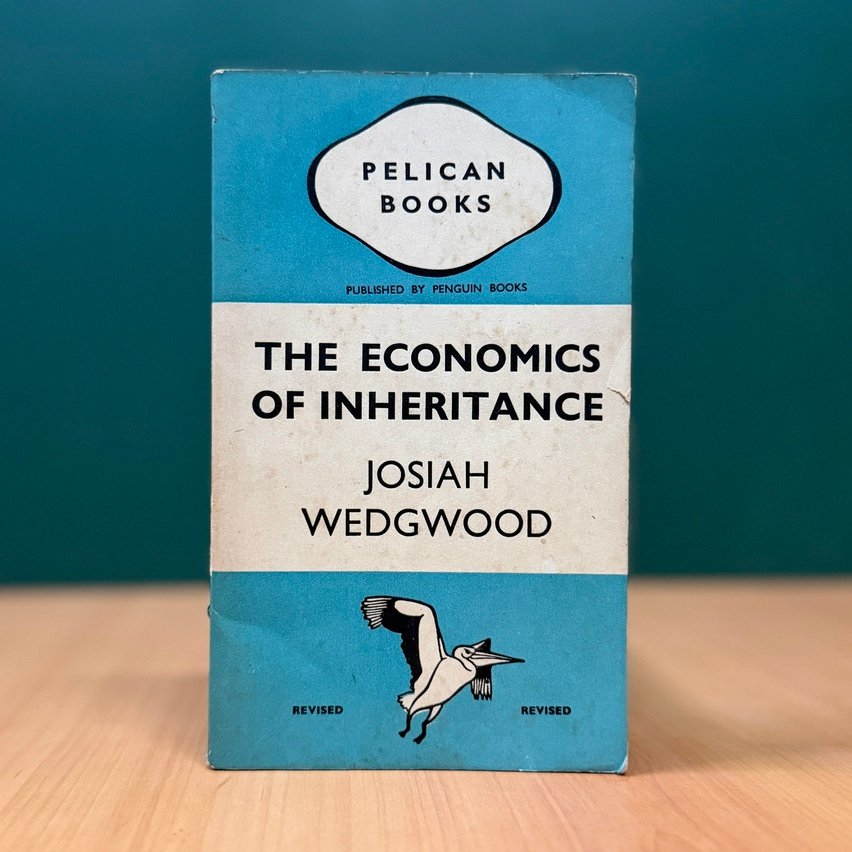
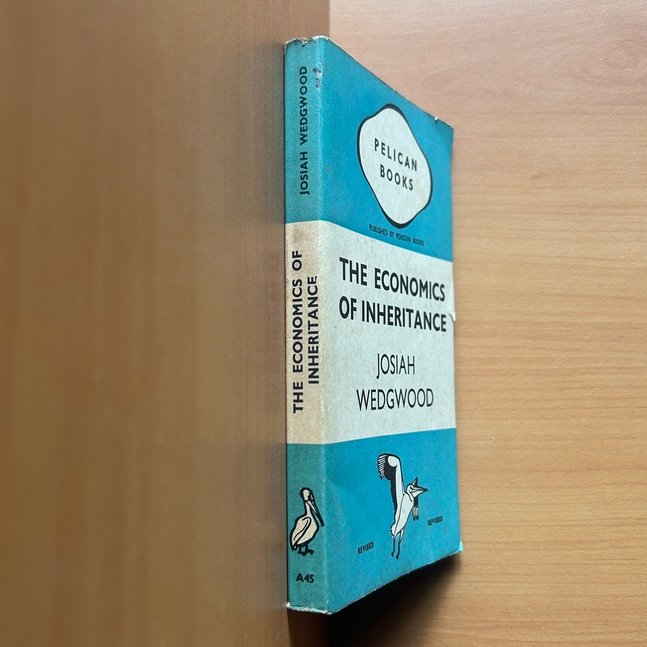
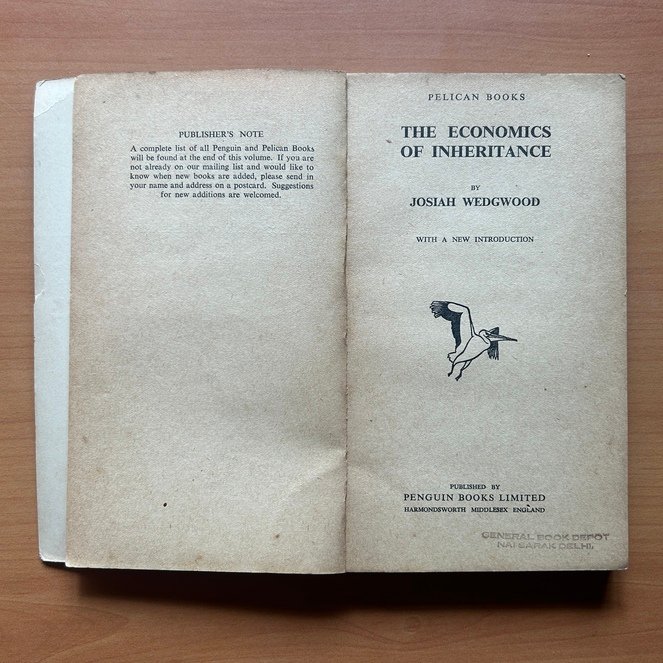
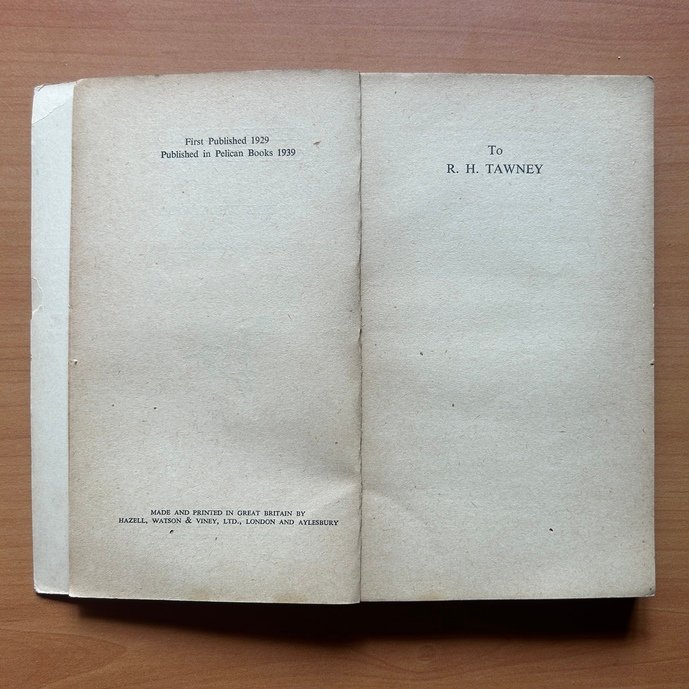
The Economics of Inheritance
🔹 Author: Josiah Wedgwood
🔹 Publisher: Pelican Books
🔹 Edition: 1939
🔹 Binding: Paperback
🔹 Pages: 275
🔹 Size: 4.5 × 0.5 × 7 inches
🔹 Language: English
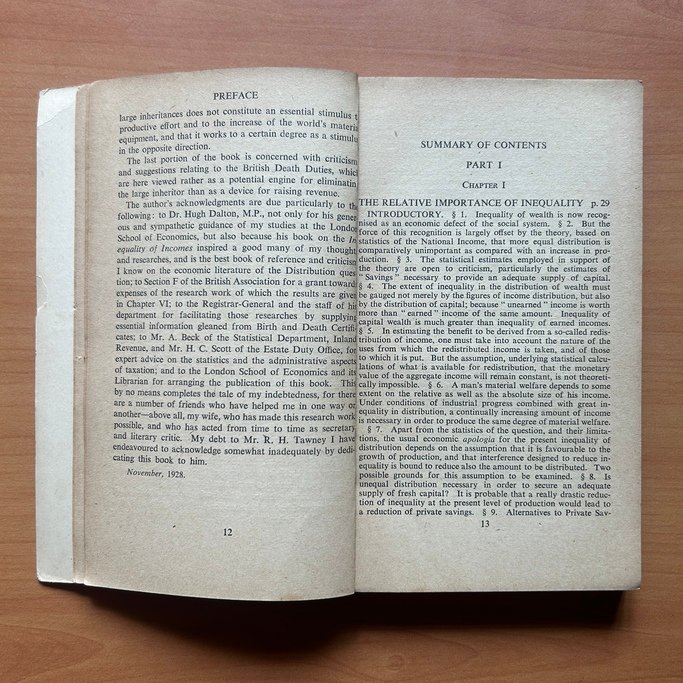
Written by British politician and social reformer Josiah Wedgwood, The Economics of Inheritance presents a thoughtful exploration of one of the most enduring questions in political economy—the role of inheritance in shaping wealth, opportunity, and social inequality. Published by Pelican Books in 1939, the book reflects the intellectual and political debates of the interwar period, when economists, policymakers, and reformers were actively reconsidering the relationship between private wealth and the public good.
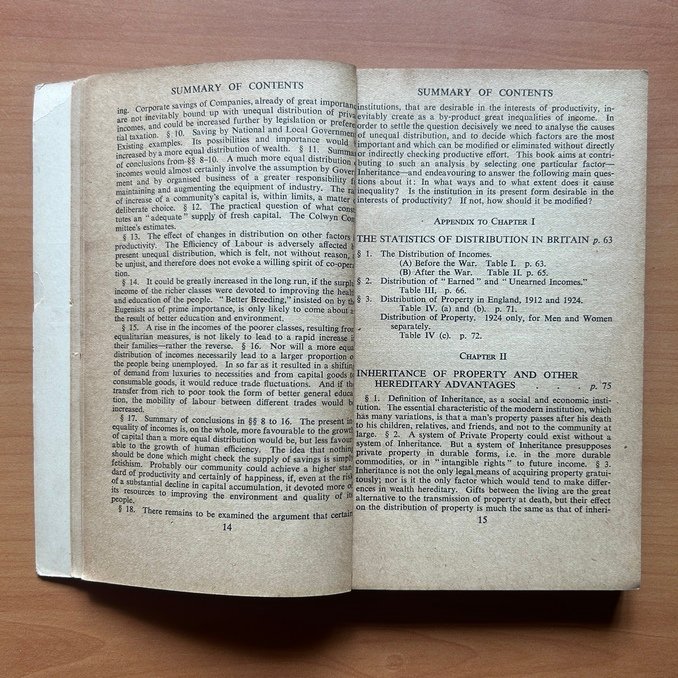
In this work, Wedgwood examines how inherited property influences economic systems and social mobility. He discusses the historical development of inheritance laws, the accumulation and transfer of wealth across generations, and the broader effects these practices have on economic opportunity and national prosperity. Through careful reasoning, the author evaluates how inherited wealth can shape class structures, influence economic power, and affect long-term patterns of social development.
The book also addresses questions of taxation, property rights, and public policy, encouraging readers to consider how governments might balance individual rights with broader social and economic objectives. Rather than offering a purely theoretical discussion, Wedgwood places his arguments within the historical realities of early twentieth-century Britain, making the work both intellectually engaging and historically informative. His analysis provides valuable context for understanding later debates concerning wealth taxation, social welfare, and economic reform.
One of the enduring strengths of The Economics of Inheritance is its ability to combine economic theory with ethical and political reflection. Wedgwood explores not only the financial implications of inheritance but also its social consequences, inviting readers to think critically about fairness, equality of opportunity, and the responsibilities associated with wealth. These themes continue to resonate in contemporary discussions of taxation, public finance, and economic inequality.
Published by Pelican Books in 1939, this paperback edition contains 275 pages and measures 4.5 × 0.5 × 7 inches. As an early Pelican publication addressing fundamental issues of political economy and social reform, it remains a valuable reference for historians, economists, students, and collectors of classic economic literature.
- Written by Josiah Wedgwood
- Published by Pelican Books
- 1939 Edition
- Paperback binding
- 275 pages
- Size: 4.5 × 0.5 × 7 inches
- Language: English
- Examines inheritance, wealth distribution, and economic policy
- Explores taxation, property rights, and social reform
- Provides historical insight into twentieth-century political economy
- Valuable for students of economics, history, and public policy
- A classic work of economic and social thought
🔹 Collector’s Note
This 1939 paperback edition of The Economics of Inheritance, published by Pelican Books, is a noteworthy collectible for readers of economics, political theory, and social history. Written by Josiah Wedgwood, the book captures important debates surrounding wealth distribution, inheritance, and public policy during the early twentieth century. As an early Pelican title and a historically significant work on political economy, it is an excellent addition to collections of economic literature, social reform, and British intellectual history.




Reviews
There are no reviews yet.